This Singapore mum bakes and sells lactation cookies and reveals food and recipes to increase breast milk supply!
It’s hard to believe that Singapore mummy of 3, Joanna Goy, was totally clueless about breastfeeding when she had her first baby 5 years ago.
Today, Joanna makes her own lactation cookies and runs Singapore Lactation Bakes (SLB), which specialises in the creation of lactation cookies and muffins.
We ask Joanna, a former banker, how she found her true calling. She also reveals a secret recipe to increase breast milk supply!
Singapore mum bakes lactation cookies
To start with, tell us a little bit about your breastfeeding journey?
(Joanna is mummy to 3 beautiful girls, Jolinda (5), Jophia (2) and Jorissa (4 months old))
Joanna reveals, “When Jolinda was born, I was totally clueless about breastfeeding. I thought it was something that came naturally so I didn’t prepare myself for it at all.”
“It did not occur to me that I had to read or learn about breastfeeding, as I thought it was going to be a breeze and natural. But I was wrong.”
“I didn’t have enough milk, and almost went into depression. Returning to work meant more stress and pressure.”
“I did not try any breast milk booster with Jolinda as I had no idea there were even supplements to increase breast milk.”
“That first breastfeeding journey only lasted for 9 months.”
2 years later, I was blessed with Jophia. This time, I joined a mummy support group – there was a lot of support emotionally as well as a lot of advice, and that really made a difference.”
“This is when I got to know about milk boosters and started doing more research about them.”
“Geared with more knowledge, I am now doing much better at breastfeeding Jorissa, and am supporting a group of breastfeeding mums too!”
How did you stumble upon the idea of lactation cookies?
Says Joanna, “I came to know about lactation cookies from my mummy friends. They were trying lactation cookies and were recommending them to each other.”
“Initially, I was skeptical, as it sounded too good to be true.”
“Also, to my shock, I found that lactation cookies are costly. So I decided to try baking them myself. At first, to be honest, I did not see an immediate increase in my milk supply. But a few days later, I noticed my milk supply had increased.”
“As I continued baking and eating more of the lactation cookies, the amount of milk that I was able to produce gradually increased as well.”
“Eventually, I had so much surplus milk, I could even give my daughters a milk bath! I was so happy and relieved that my children were finally able to enjoy the benefits of breast milk!”
How did you end up starting Singapore Lactation Bakes (SLB)?
Joanna tells us, “After my experience with Jolinda, I knew what it felt like to have a low supply and feel unsupported. I felt deeply about this and I really hoped no other mum would have to go though what I went through, so I offered the cookies to my own circle of friends.”
“They loved them and soon word spread, bringing me to the blessed place I am now.” And that is how Singapore Lactation Bakes(SLB) was born.
“We are also blessed with the opening of our own store recently! It is located at 183 Jalan Pelikat #B1-105 s(537643), we are a team of four at the moment.”
You mentioned that you were a banker before…what made you quit or change lane?
Joanna says, “As SLB progressed, I got the opportunity to talk to a lot of different mums who had various problems with breastfeeding. I really wanted to help them more.”
“I couldn’t do that while holding on to two jobs so I chose to quit mine and focus on helping the mums. I also took breastfeeding courses to gear myself with more knowledge to help more mummies.”
Were there any hiccups to starting and running this business?
“I think I’ve been blessed in this area as everything has been smooth so far.”
“I think the biggest challenge is keeping up with with the variety of bakes (both what we have now as well as with developing new flavours/products) while balancing taste and effectiveness.”
“We have seen an increase in demand over the years as hospitals have begun advocating breastfeeding in the recent years”, Joanna reveals.
Cookies and muffins go for $6.50, cookies cups are $16.90 and teas are $9.90.
What feedback have you received from mummies? Has it helped them boost breast milk supply?
Joanna informs us, “The reviews have been quite good. Though it might not work for everyone, the majority of mummies have reported that our bakes have worked for them.We are working relentlessly to improve our bakes in terms of their variety, taste and effectiveness.”
“It’s usually a gradual increase in the amount of milk they pump, not necessarily just a specific pump or latch timing.”
“As our slogan says, “Eat. Breastfeed. Repeat”.”
“We encourage mummies to eat the bakes, breastfeed and then repeat. The boosters will not increase milk permanently. They will increase milk supply temporarily either by having fuller breasts or more let down.”
“Mummies are encouraged to pump the milk out. They need to pump or latch when they experience let down, to stimulate their body to make more milk. Our bodies work by demand and supply. More milk drawn will result in more milk produced.”
As a mumpreneur, how do you manage running SLB and looking after kids?
Joanna admits, “This has been a real challenge. That is why SLB’s working hours are from 9 am – 5 pm. We drop our kids off at school in the morning and pick them up afterwards and try to spend as much time as we can, when we are with them.”
From your experience and knowledge, which food works well as breast milk boosters and which don’t?
Joanna says, “We have a list of 68 boosters for customers to take a look at and try.”
Ultimately, it really depends on how their bodies work and react to the different foods.
PHOTO: SINGAPORE LACTATION BAKES
For myself, conventional boosters do not work. My boosters are miso (yes, Japanese miso) and peppermint (Yes! Peppermint! It’s a known milk killer but it really worked very well for my milk supply). I have a weird body!
Joanna also shares a breast milk booster recipe with us, that apparently works very well. Thank you, Joanna! ?
Lactation carrot cake
CARROT CAKE
2 cups plain flour
1 tsp cinnamon
1 tsp baking powder
1 tsp bicarbonate of soda
1/2 tsp salt
1.5 cups ground walnuts/pecans
4 large eggs
1.5 cups caster sugar
300ml sunflower oil
3 cups of grated carrots
CREAM CHEESE ICING
150g unsalted butter,
softened 240g f cream cheese
840g icing sugar, sifted
METHOD
Whisk together sugar, eggs and oil until thick.
Add finely grated carrots and fold them into the mixture.
Add flour, baking soda, baking powder, flax seed and cinnamon and mix gently.
Fold in walnuts.
Grease and line a 7” tin.
Pour mixture into the tin and place in the oven at 175 °C for 25-27 minutes or until a skewer comes out clean.
Leave to cool.
For cream cheese icing, in a large bowl,
Beat butter till pale and fluffy.
Add the cream cheese.
Add icing sugar.
Add in the powdered sugar and vanilla until it’s smooth and creamy.
Decorate as desired.
Lastly, any advice to new mums on breastfeeding and breast milk?
Joanna has this to say, “You are not alone! When you feel like giving up, just tell yourself – just one more day!”
“Finding a support group or meeting up with a Lactation consultant will help you identify the problem and rectify it too. Just don’t give up!”
Mother of three Joanna Goy details her breastfeeding struggles and how she overcame her nursing challenges.
BY MELISSA TAN
POSTED: 02 AUG 2017 UPDATED: 27 FEB 2018
“I’m a proud mother of three beautiful girls. My newborn, Jorissa, is barely a month old but is already giving me the most adorable expressions.
Jophia, 2, loves to mimic her older sister; while Jolinda, 5, is my fun-loving girl who loves to dance.
I breastfed all my girls, but it wasn’t easy and breastfeeding my firstborn was the toughest. As a first-time mum, I was completely clueless about breastfeeding. I thought that it was something that came naturally to new mums, so I didn’t prepare myself at all.
Everything that I’d read and did research on about having a baby was about taking care of a newborn. It just didn’t dawn on me I had to learn about breastfeeding.
However, I was determined to nurse my child.
I had problems producing enough milk, and like many other new mums, I was constantly gripped by the fear that I would not be able to provide enough milk to meet Jolinda’s growing needs.
I remember the first time I used a breast pump. Jolinda was 3 days old, and I wasn’t able to produce single drop of milk.
“Thoughts about whether she would have enough milk for her next feed plagued me on a daily basis.”
Thankfully, my milk came in on the fourth day. But, I was only able to get 30 to 50ml at each pump session ― this threw me into a state of constant anxiety. Thoughts about whether she would have enough milk for her next feed plagued me on a daily basis.
In addition, family members were questioning me and telling me that I didn’t have enough milk ― and I almost went into a depression.
After my maternity leave, I went back to work. Back then, I was working in the fast-paced environment in a bank, and had to juggle a hectic work schedule as well as family life. I was pumping twice a day at work, and I latched Jolinda directly once I came home.
The pumping and latching helped, but I found it increasingly challenging to find time to pump ― which eventually affected my milk supply. I agonised over this and tried so many ways to increase it ― to no avail.
Jolinda began to rely less and less on my milk when she started solids at 6 months. And much as I persevered, I was only able to provide Jolinda with two full breastmilk feeds for the first 9 months of her life.
While my family questioned my low supply, my husband, Nicholas, was very supportive of me, and I am forever thankful for that. He constantly defended my decision to breastfeed, and always told me that I was doing great.
Jolinda was 2, I found that I was pregnant again. While I was over the moon about having another girl, I immediately was reminded about my low milk supply experience with Jolinda.
Determined not to let history repeat itself, I started researching intensely on ways to boost my milk supply.
Another thing I did this time round, was to join a mummy support group. This made a world of difference ― the other mums supported me emotionally, and provided valuable advice on breastfeeding.
However, my fears were realised ― yet again ― when Jophia was born. My milk came in on the second day, and the yield was as low as before! This persisted for several days, and despite trying everything that I had read about, nothing seemed to work.
I was heartbroken.
“Determined not to let history repeat itself, I started researching intensely on ways to boost my milk supply.”
I turned to the support group of mums to find out how they were boosting their milk supply, and what tips they had to find success with breastfeeding.
My lucky break came when one of them mentioned something that I had not heard before ― lactation cookies.
I was extremely sceptical ― it just sounded too good to be true. But having exhausted all my other options, I was desperate. I decided to give these a shot.
Then, I found out that lactation cookies are costly. So, I did a bit of research to see if I could bake them myself. Galactagogues (a food that increases the flow of a mother’s milk), like brewer’s yeast and oats, are added in these cookies, to increase the milk supply. Here is one recipe.
When I didn’t see an immediate increase in my milk supply, I was disappointed. But I realised that my impatience had gotten the better of me, as my milk production slowly climbed. In a few days, I found that I was able to produce 80ml in a single pumping session.
Soon, I was producing around 300ml in a single pump, and I was even able to freeze a stock of breastmilk in the freezer.
Now that I have another baby girl, Jorissa, I’m happy to say that breastfeeding her is much easier. My experience ignited a passion in me to help other new mums with their breastfeeding journey, so I started Singapore Lactation Bakes, which specialises in lactation cookies and muffins.
I’ve also started training to be a certified breastfeeding counsellor as I realise that there is so much to learn ― from how to properly latch your baby, to the possible problems that can contribute to sore nipples.
Here are my favourite tips when it comes to boosting one’s milk supply:
1. Latch and pump
Keep latching and pumping to increase your supply. When more milk is drawn, more milk is produced. If your baby is having weight-gain problems, aim to nurse at least every 1½ to 2 hours during the day, and every three hours at night.
2. Be zen
Try to stay relaxed when you’re breastfeeding. Stress is the number one milk-killer! Sleep when your baby sleeps, and keep yourself hydrated.
“Stress is the number one milk-killer!”
3. Take foods to increase your supply
Eating certain foods will help to boost your milk supply. As you latch your baby or pump, this signals to your brain to continue producing this increased amount.
4. Skin to skin
Have skin-to-skin contact once your baby is born, and latch on demand from birth.
5. Try to breastfeed exclusively
Avoid offering baby solids, water and formula in the first six months. If you have been supplementing the feeds with formula, it’s not too late to reduce the amount of formula very gradually, to challenge your breasts to produce more milk by latching or pumping more.
I’ve had the opportunity to talk to many new mums, and so many of them seem to face problems breastfeeding.
I just want to let them know that they are not alone! Every time you feel like giving up, just tell yourself ― try just one more day.
Finding a support group, or engaging a lactation consultant can also help you identify, and rectify the problem.”
Joanna Goy, 31, is mum to Jorissa, 1 month, Jophia, 2, and Jolinda, 5. She is also the founder of Singapore Lactation Bakes.
You’ll probably need some explanation of terms to help you compare breast pumps as well, so here goes:
Grade – all Spectra breast pumps have a closed system, which means they’re hygienic for use by multiple users, but spectra hospital grade breast pumps have a bigger motor, so they bear up under heavy use. Think V8 vs 4 cylinder – while both will tow well on a flat road, the V8 will perform better going uphill. In the same sort of way, both personal use and hospital grade breast pumps are fine for normal use, but if you’re relying on your breast pump for exclusive pumping or to build supply, get a hospital grade breast pump.
Suction strength – this is measured in mmHg. All Spectra breast pumps are extremely strong and you’re unlikely to use them on maximum setting. The Dew 350 does have the strongest suction, but you will find when double pumping that there doesn’t seem much difference in strength between the Dew 350 and S2. In fact, because the S2 has extra cycle speed settings, you may need a lower suction strength.
Note – because the hospital grade pumps have a bigger motor than the portable pumps, they will maintain suction strength better. For example, although the S2 and the S9+ both have suction strength over 300mmHg, the S2 may give you a better performance if you’re double pumping on a higher suction level.
Cycle speed – this is how often the pump ‘sucks’ per minute. For some women, varying the cycle speed can make a big difference, especially if you’ve been breastfeeding for longer and your body is very used to your bub.
Letdown mode – Some Spectra pumps have a ‘massage mode’ to encourage letdown. Letdown is the physiological process that occurs when your body responds to your baby’s signals and starts the milk flow. Babies tend to have a light, quick suckling pattern when they’re telling mum to get things started, and the massage mode of Spectra pumps copies this. Once milk is flowing, you swap to regular expressing mode, which is slower and stronger.
Closed system – this means that there’s a complete physical barrier between your milk and the pump motor. This is very important and is a feature missing from many very well known brands. If the pump has an ‘open system’ then milk particles and moisture can travel down the tubing and enter the pump motor, where it is impossible to clean properly or sterilise. Over time, this can lead to mould inside the pump, and it also means that sharing a pump with an ‘open system’ is a possible source of virus transmission (this is why you should never buy a second-hand breast pump with an open system, even if you buy a new milk collection kit, you cannot sterilise the actual pump!). Spectra has this covered – all our pumps have a closed system to protect your breastmilk and the pump motor.
Spectra Breast Pumps are made in Korea since 1999, and has been exported to various parts of the world like Singapore, Taiwan, Malaysia, US, UK, Australia, China and etc since 2013. There are three types of pumps available from Korea – hospital grade breast pumps, portable/personal pumps & manual pumps. Locally, we have the distributors bringing in 4 models – S1, S2, M1 and S9+. In this article, we hope to bring to you the features, pros and cons of each of these models.
SPECTRA S1:
Key features –
This is a hospital grade double electric breast pump, which makes it more durable.
At a lightweight of 1.12kg, it is very portable.
The pumping strength is strong at 280mmHg.
There are two modes – massage mode and expression mode. Both modes can be adjusted individually, so moms can switch it back and forth between the two. It is well liked by mommies who find the suction speed and rhythm gentle and effective, mimicking how the baby suckles to trigger a letdown after massaging, and subsequently to express the breast milk which helps empty the breasts, stimulating more milk production. Moms can digitally control and save the favourite setting for pumping speed and rhythm as a program.
The best feature for most moms is how quietly it pumps! The nightlight feature allows one to clearly see the display screen and controls in the dark. Late night pumping would be so easy!
All the parts are BPA-free.
As a double pump, it is time saving to pump both breasts at the same time. It also works well as a single pump, suitable for pumping the other breast while latching baby on one.
It is also a closed system where the pump/motor will not be in direct contact with the breast milk, so it is easier to clean and the breast pump stays sterile and lasts longer.
If these are not enough for you to get the Spectra S1, you might want to know that it comes with an in-built rechargeable battery, which allows pumping to be done anywhere even when there is no power plug!
In summary:
Pros:
– Hospital grade
– Closed system
– Can be used as a double or single pump
– Lightweight
– Very quiet pump
– Nightlight
– Value-for-price
– In-built rechargeable battery
– Timer function & auto power off after 30 mins
– Comes with 1 year local warranty
Cons:
– Breast shield sizes are quite narrow (24mm to 32mm)
– Wide neck bottles required (an adaptor can be purchased separately)
SPECTRA S2:
Key features –
S2 model has all the amazing features of Spectra S1, except that S2 does not have any in-built rechargeable battery and works only on an AC power plug. This may be a huge point for consideration, especially if you need to pump anywhere. However, if this hospital grade double electric breast pump is for home use, the savings on the cost of getting S2 instead of S1 would be great, making the S2 very affordable.
Other differences between the S1 and S2 are the colours, and minimal differences in the weight.
In summary:
Pros:
– Hospital grade
– Closed system
– Can be used as a double or single pump
– Lightweight
– Very quiet pump
– Nightlight
– Value-for-price
– Timer function & auto power off after 30 mins
– Comes with 1 year local warranty
Cons:
– No in-built rechargeable battery and works only on mains power plug
– Breast shield sizes are quite narrow (24mm to 32mm)
– Wide neck bottles required (an adaptor can be purchased separately)
SPECTRA S9+
Key features –
Weighing only 297g, this is one of the lightest good quality, affordable breast pump for personal use.
Similar to all the other Spectra breast pumps, S9+ has the massage mode and expression mode, but the settings cannot be saved as a program like the S1 and S2. The LCD display screen has its own nightlight feature which allows late night pumping.
Like all other Spectra breast pumps, this one adopts the closed system.
A main selling point of the S9+ is that it has built-in rechargeable batteries, so mommies can pump anywhere, at your convenience.
In summary:
Pros:
– Closed system
– Can be used as a double or single pump
– Extremely lightweight
– LED display screen
– Value-for-price
– In-built rechargeable battery
– Timer function & auto power off after 30 mins
– Comes with 1 year local warranty
Cons:
– Breast shield sizes are quite narrow (24mm to 32mm)
– Wide neck bottles required (an adaptor can be purchased separately)
– Not as quiet as the S1 and S2
SPECTRA M1:
Key features –
Similar to S9+, the M1 is incredibly lightweight at 297g. It is highly suitable for personal use, anywhere, anytime, since it also has in-built rechargeable batteries.
The M1 set is possibly the most affordable pump compared to the other models. Having the features like all other Spectra breast pumps, the only difference is that M1 does not have any nightlight or display screen. This, however, does not affect the selection and customization of the suction and pump level with the buttons.
In summary:
Pros:
– Closed system
– Can be used as a double or single pump
– Extremely lightweight
– Very quiet pump
– Value-for-price
– In-built rechargeable battery
– Comes with 1 year local warranty
Cons:
– Breast shield sizes are quite narrow (24mm to 32mm)
– Wide neck bottles required (an adaptor can be purchased separately)
– No nightlight
– No timer, auto switch off after 30 mins
Hope the above analysis of the 4 models of breast pumps could help you make an informed choice of a suitable Spectra breast pump. We have a summary of the 4 models in the table below.
Heat up 2-3 tablespoons of vegetable oil in a pan, and sear the chicken pieces until lightly browned all over. Remove to a plate.
Add the chicken to a big pot, along with the carrots, miso paste and mirin.
Add water or chicken stock to just cover all the ingridents
Put in pressure cooker for 25 min or Bring everything to a boil, then turn down the heat and simmer slowly for 45 minutes to 1 hour, until the chicken is tender.
SUPERFOOD: AvocadoEggs combined with avocado are an excellent anti-aging remedy. This food combination contains vitamin C which promotes the synthesis of collagen and vitamin A, in the form of retinol and beta-carotene, which protects the skin from oxidative stress damage.Avocados, full of healthy fats and fiber, are a great addition to your diet while breastfeeding. The fat in avocados help you and your baby absorb fat-soluble vitamins and can also be beneficial to your baby's developing brain health.
Cut the avocado into strips about 13mm thick. Place in shallow bowl and toss to coat with the flour.
Whisk milk and potato flakes in a small shallow bowl. Stir together the bread crumbs, garlic powder and salt in a separate small shallow bowl
Dredge the flour-dusted avocado in the milk mixture and then in the bread crumbs, pressing the avocado into the bread crumbs to coat each slice completely.
Place the avocado slices in a single layer on the prepared baking sheet, spray with cooking spray and bake for 15 minutes or until fries are golden brown.
Notes
Eggs combined with avocado are an excellent anti-aging remedy. This food combination contains vitamin C which promotes the synthesis of collagen and vitamin A, in the form of retinol and beta-carotene, which protects the skin from oxidative stress damage. Avocados, full of healthy fats and fiber, are a great addition to your diet while breastfeeding. The fat in avocados help you and your baby absorb fat-soluble vitamins and can also be beneficial to your baby's developing brain health.
I Walked up the snow-covered steps of a quaint bungalow, excited to meet a two-month-old little boy and his mama. She had sent me an email a few days prior; all it said was, “I need help with my baby, he’s crying all the time. Can you do anything?” This is common story in my inbox. I replied I could be there Wednesday.
I knocked on her door, and a beautiful thirty-something woman answered, bouncing a bundle. We sat down on her couch and started to chat. She said he’d been born on his due date, a beautiful delivery, and she was back at home 24 hours later. Breastfeeding hurt in the hospital, but she was told that was “normal” and it would get better. A week later, still trying to “push through”, she couldn’t take it any longer, and went to her local breastfeeding clinic. Her little man had a tongue tie, they said, a common reason for breastfeeding pain. The physician clipped the tongue tie in the office and sent her home with instructions on how to move forward. She continued “pushing on” and did feel some relief, but continued to struggle with supply and latch issues. She was back and forth between clinics and private consultants, as she was desperate to breastfeed. She had dreamed of nursing her baby, like many moms, and the journey had consumed their household. She could not get a comfortable latch no matter what she tried or whose help she enlisted. She was consumed with trying and not giving up. I watched this woman become more teary and shaky as her story progressed. She told me he was gaining weight, but was very fussy and cried at the breast and throughout most of the day and night. Her husband had taken the day off work to be home for our appointment and he sat quietly with his arm around his wife and babe.
I first told her she was doing a beautiful job with her son. I told her the best part of my morning so far was getting to witness the way she looked at him and that I could hear the efforts she had been putting in to try to establish pain-free breastfeeding and an ample supply. I acknowledged that her path sounded full of challenges and I asked her simply, “How are you feeling?”
She broke down. Sobbing in her living room, she told me that breastfeeding was a number one priority for her, and she had read all the books and had sought out so much help and support, but that she just couldn’t do it anymore. She went on to tell me that the stress of nursing had taken all the joy out of becoming parents and it was all both her and her husband could think about. I could see that this woman was full of anxiety and had some real red flags of depression. She shared that she cried alongside her baby throughout most of the day, and was starting to wonder how she was going to keep going. She wasn’t leaving the house and spent all day feeding and pumping.
“Do you want to keep breastfeeding?” I asked her. Both her and her husband looked at me in silence. I realized in this moment what this woman needed from me, a registered nurse and lactation consultant. She needed permission. I told her that the most important thing was that her baby felt loved and that as a mom she had the ability to nurture and care for her baby. I told her flat out, “It is okay to stop and give him a bottle of formula.”
She and her husband hugged and both started to cry. Minutes later, they said, “Thank you, we needed to hear that.”
This is such a controversial topic. #Fedisbest is flooding the internet, and there are so many varying opinions. As a lactation consultant, I am an advocate for breastfeeding, and will go the distance with any family to ensure it happens. But it is not up to anyone but that mother to decide when she has reached her limit. A mama’s mental health trumps breastfeeding. Every time. Breastmilk does not care for, nurture and bond with the baby. A mother does. I am not arguing the health benefits of breastfeeding. Those are known facts. I am talking about the part that just isn’t talked about enough: a mom’s mental health.
Last year, for a few days anyway, the whole country was talking about it. Suffering from postpartum depression, Vancouver mother Florence Leung ended her life two months after her baby was born. On her memorial Facebook page, her husband recently wrote the following:
“To all the new moms experiencing low mood or anxiety, please seek help and talk about your feelings. You are not alone. You are not a bad mother. Do not EVER feel bad or guilty about not being able to exclusively breastfeed.”
As you can guess, despite being an advocate for breastfeeding, I agree completely. Somewhere along the way, our well intentioned, health-benefit focused campaigns on breastfeeding have fueled the message of guilt, shame and pressure on moms that are struggling and it is time for that to change.
I recently received a card and photo in the mail from the mom who gave up breastfeeding after our visit. It was her guy’s one-year birthday. In the picture, I saw a healthy, thriving family. The note said that the day I gave her permission to stop breastfeeding was the day she felt a shift. The tears stopped. She started enjoying the little moments with her boy and their bond grew. She said she still has moments when she feels sad that she and her son missed out on the nursing experience, but she knows that stopping is what her family needed.
We need to stop arguing about what is better. Breastfeeding, formula, bottles, pumping. It isn’t something that is up to “us.” It is not social media’s business, your neighbour’s, your mother’s, or the business of that mom group you belong to. It is yours exclusively.
As much as I like #fedisbest, I think it should evolve into new movement: #momsmentalhealthmatters. A healthy mom is necessary for a healthy, thriving baby—and that is what matters.
Carrie Bruno is a registered nurse, lactation consultant and sleep coach who runs The Mama Coach in Calgary, Alberta. Some details of this story have been changed to protect the family’s privacy.


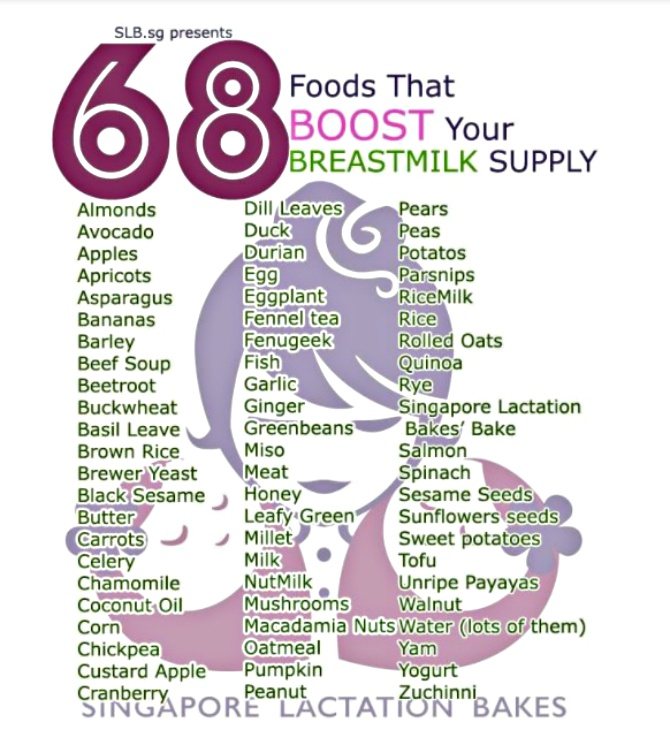 PHOTO: SINGAPORE LACTATION BAKES