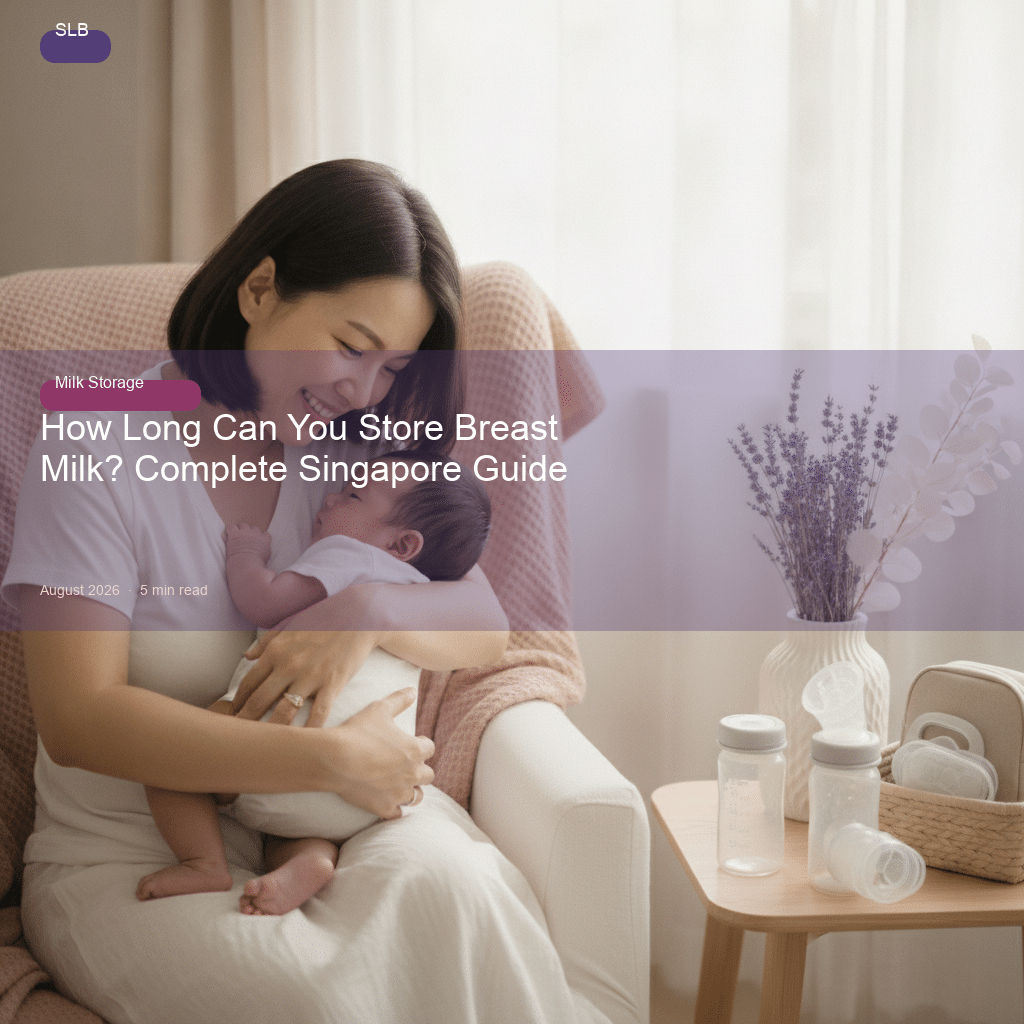
Breast Milk Storage Singapore: How Long Is Safe?
You pumped. You worked hard for every drop. The last thing you want is to pour it down the sink because you were not sure how long it would last.
Breast milk storage in Singapore is a little different from what you might read on Western websites. Our heat and humidity change the rules. This guide is written specifically for life here, whether you are in an air-conditioned condo or a warm HDB kitchen with a single-door fridge.
Let us walk through it together.
—
Breast Milk Storage Times at a Glance
Here is a simple reference table. Keep it saved on your phone or print it out for your helper or confinement nanny.
| Where You Store It | Temperature | How Long It Lasts |
|---|---|---|
| Room temperature | 25°C to 26°C | Up to 4 hours |
| Cooler bag with ice packs | Around 15°C | Up to 24 hours |
| Refrigerator | 4°C or below | Up to 4 days |
| Single-door freezer compartment | Around -15°C | Up to 2 weeks |
| Two-door freezer | -18°C or below | 3 to 6 months |
| Deep freezer | -20°C or below | Up to 12 months |
These timings align with the WHO breastfeeding guidelines and are adjusted for our local conditions.
—
⚠️ The Singapore Heat Warning Every Mum Needs to Read
Singapore’s average ambient temperature is 28°C to 32°C year-round. That is warmer than the 25°C room temperature that most international guidelines assume.
The four-hour rule gets shorter in real Singapore conditions. If you are in a room without air conditioning, aim to refrigerate your milk within one to two hours. Even with air-con on, do not leave expressed milk sitting out longer than needed.
This is not meant to scare you. It is just something the websites from the UK and US often miss. You deserve information that actually fits your life here.
—
Know Your Fridge: Single-Door vs Two-Door Matters
This is something a lot of Singapore mums get caught out on.
Many older HDB homes have a single-door fridge. The freezer compartment sits inside the fridge and usually only reaches around -15°C. At that temperature, breast milk keeps for about two weeks, not the six months you may have read online.
If you have a two-door fridge with a separate freezer section that reaches -18°C, you are looking at three to six months of safe storage.
A standalone deep freezer at -20°C can keep milk safely for up to twelve months.
Check your fridge temperature if you are unsure. A simple fridge thermometer from any hardware store or Shopee will do the job.
—
5 Golden Rules for Storing Breast Milk
- 🏷️ Label every bag or container. Write the date, time, and volume in millilitres. This matters especially if a caregiver or childcare centre is handling your milk.
- 🥛 Store in small portions. 60ml to 120ml per bag reduces waste. If baby only drinks half, you have not lost everything.
- 🧊 Lay bags flat to freeze. They stack neatly and thaw faster. Leave a little space at the top because milk expands when frozen.
- 🚪 Store at the back, not the door. Temperature near the door fluctuates every time you open it. The back of the shelf or freezer stays more consistent.
- ✅ Use BPA-free storage bags or hard-sided containers made for breast milk. These are widely available on Shopee, Lazada, Watsons, and Guardian in Singapore.
—
How to Thaw and Use Stored Breast Milk Safely
Thawing
The safest way is to move frozen milk to the fridge the night before you need it. It will thaw slowly and safely.
If you need it sooner, hold the sealed bag under lukewarm running water or place it in a bowl of warm water. Do this gently and gradually.
Never microwave breast milk. It destroys nutrients and creates hot spots that can burn your baby’s mouth.
After Thawing
- Thawed milk kept in the fridge should be used within 24 hours.
- Do not refreeze milk that has already been thawed.
- Once warmed, use within 1 to 2 hours.
If Baby Did Not Finish
If your baby drank from a cup or directly from a feeding vessel, bacteria from saliva enters the milk. Use any leftover milk within 1 to 2 hours and then discard it. It feels wasteful but it is the safest choice.
—
How to Tell If Breast Milk Has Gone Bad
Fresh breast milk has a slightly sweet or mildly soapy smell. Some mums notice it smells a bit like oats or almonds. That is completely normal.
Spoiled milk smells clearly sour. If it smells off, trust your instincts and do not use it.
What about colour?
Breast milk can look blue-ish, white, yellow, or even slightly orange depending on what you have been eating. Frozen milk may look yellowish. All of this is normal and the milk is safe as long as it has been stored correctly and within the right timeframes.
If you are ever unsure, our IBCLC-certified team is here to help you figure it out without judgment.
—
Can I Add Fresh Milk to Already Stored Milk?
Yes, with one important step. Cool your freshly expressed milk in the fridge first. Once it is cold, you can add it to already refrigerated or frozen milk.
Never add warm fresh milk to cold stored milk. The temperature difference can partially thaw frozen milk and affect its quality and safety.
—
Storing Breast Milk at Work or On the Go
Many Singapore mums return to work between four and sixteen weeks after delivery. Building a freezer stash before going back is one of the most common goals we hear about.
If you are expressing at work, a good insulated cooler bag with ice packs will keep your milk safe for up to 24 hours. Refrigerate it as soon as you get home.
Air-conditioned offices in Singapore typically run at 22°C to 24°C. That is a bit safer than an unairconditioned room but you should still refrigerate expressed milk promptly rather than leaving it on your desk.
For practical support on the whole breastfeeding journey at work and beyond, take a look at our breastfeeding resources for new mothers. There is a lot there that will make the logistics feel more manageable.
—
Travelling with Breast Milk from Singapore
If you are flying out of Changi Airport, you are allowed to bring breast milk in your carry-on. There is no volume restriction for breast milk the way there is for other liquids. Declare it at security and keep it in your cooler bag with ice packs.
Always check the entry rules for your destination country as well. Most countries accept breast milk for personal infant use without issue, but it is good to confirm before you travel.
—
Frequently Asked Questions
How long can breast milk sit out in Singapore’s heat?
In a typical Singapore home without air conditioning, aim to refrigerate within one to two hours. In an air-conditioned room around 24°C, up to four hours is generally considered safe. When in doubt, refrigerate sooner.
How long does thawed breast milk last?
Once thawed in the fridge, use within 24 hours. Once warmed, use within one to two hours. Do not refreeze.
Is it safe to store breast milk in the freezer door?
No. The door is the warmest and least stable part of the freezer. Always store milk at the back of the freezer where the temperature is most consistent.
Why does my frozen breast milk look yellow? Is it still safe?
Yes. Breast milk colour changes naturally and frozen milk often looks yellowish. As long as it was stored correctly and within the recommended timeframes, it is safe to use.
What labelling do I need for childcare drop-off?
Most Singapore childcare centres including PCF, NTUC, and MindChamps ask for the date, time of expression, and your child’s name on every bag or container. Confirm with your centre directly as requirements can vary.
—
Building Your Freezer Stash
If you are working toward a freezer stash before returning to work, the key is consistency over intensity. A little extra expression each day, done gently and regularly, adds up over time.
The NHS breastfeeding advice and local lactation consultants both agree that frequent, comfortable feeding and expressing is what helps your body respond best.
Nourishing yourself through this season matters too. Many mums on their breastfeeding journey find that our SLB lactation bakes make a thoughtful addition to their daily routine. They are made with wholesome ingredients to nourish and comfort you while you do this incredible work.
—
This guide is for informational purposes and does not replace medical advice. If you have concerns about your milk supply, your baby’s feeding, or breast milk safety, please consult a qualified lactation consultant or your healthcare provider.