Why Preparing for Breastfeeding Before Birth Actually Matters
If you are pregnant and already thinking about breastfeeding, you are already doing something right. So many mums in Singapore start their breastfeeding journey with the best intentions. And yet, exclusive breastfeeding rates drop quite sharply in the first few months after birth. Not because mums gave up. But because they hit unexpected challenges without the tools or support to navigate them.
The good news is that you can prepare for breastfeeding in Singapore long before your baby is born. And doing so makes a real difference. This guide walks you through everything in a practical, no-pressure way. Think of it as a warm chat with a friend who has been through it and wants to help you feel ready.
According to the WHO breastfeeding guidelines, exclusive breastfeeding for the first six months gives babies a strong nutritional foundation. Singapore’s Health Promotion Board echoes this recommendation. Knowing this early helps you set your intentions and make a plan that works for your life.
Attend an Antenatal Breastfeeding Class in Singapore
This is honestly one of the best things you can do. Many mums skip antenatal breastfeeding classes because they assume they will figure it out after birth. But the early days with a newborn are intense. Learning the basics beforehand means you go in with more confidence and less panic.
Several hospitals and programmes in Singapore offer these classes. KKH Women’s and Children’s Hospital, NUH, Thomson Medical, and Mount Alvernia all run antenatal breastfeeding workshops. You can also find sessions through HPB’s HealthHub or through private IBCLCs. Some are in-person and some are online, which makes it easier to fit around your schedule.
In these classes you will typically learn about how milk supply works, different feeding positions, how to recognise hunger cues, and what to expect in the first few days. All of this is so much easier to absorb before sleep deprivation sets in.
Understand How Milk Supply Actually Works
This is something a lot of mums are not told clearly enough. Milk supply works on a supply-and-demand basis. The more frequently your baby feeds at the breast, the more milk your body is signalled to produce. Understanding this before birth helps you approach early feeding with patience rather than worry.
Your body actually begins producing colostrum as early as 16 to 22 weeks of pregnancy. Colostrum is your first milk. It is thick, golden, and incredibly nourishing for your newborn. It is also produced in small amounts, which is completely normal and exactly what your baby needs in those first days.
Knowing this ahead of time can save a lot of anxiety. Many mums worry in the early days that they do not have enough milk. But understanding the biology helps you stay calm and keep feeding, which is exactly what helps supply establish itself. You can find more reassuring, evidence-based content on our breastfeeding resources page.
Ask Your Doctor About Antenatal Colostrum Harvesting
Antenatal colostrum harvesting is becoming more widely known in Singapore, and for good reason. From around 36 weeks of pregnancy, some mothers are advised by their doctor or midwife to gently hand-express and collect small amounts of colostrum in sterile syringes.
This can be especially helpful if your baby is expected to be large, if you have gestational diabetes, or if there are any concerns about blood sugar levels at birth. Having stored colostrum means your baby can receive your milk right away even if feeding takes a little time to establish.
This is not something to do without guidance. Please speak to your OB/GYN or midwife before starting. KKH and NUH both have lactation teams who can advise you on whether this is appropriate for your situation.
Build Your Breastfeeding Support Team Before Baby Comes
One of the most impactful things you can do during pregnancy is build your support network in advance. Do not wait until you are struggling at 3am to look for help.
Here are the people worth connecting with before birth:
- An IBCLC (International Board Certified Lactation Consultant) — Many hospitals in Singapore have IBCLCs on staff, including KKH and NUH. Private IBCLCs are also available and can do home visits. Our IBCLC-certified team at Singapore Lactation Bakes is also here to support you.
- Polyclinic lactation nurses — HPB-trained nurses at polyclinics are a free and accessible resource for postpartum support.
- BMSG (Breastfeeding Mothers’ Support Group Singapore) — This community group has a helpline and peer support network. Knowing they exist before you need them is genuinely comforting.
- Your partner and family — Talk to them now about how they can support your breastfeeding goals. Sometimes the most important person on your team is the one bringing you water and snacks at 2am.
Include Breastfeeding in Your Birth Plan
Your birth plan is a wonderful place to make your breastfeeding intentions clear. You can request skin-to-skin contact immediately after birth, which helps stimulate your baby’s feeding instincts. You can also ask for early initiation of breastfeeding within the first hour after birth, often called the golden hour.
Rooming-in, where your baby stays with you rather than in a nursery, also supports breastfeeding. It means you can respond to your baby’s hunger cues quickly and feed more frequently, which helps your supply establish well. Talk to your hospital about their policies and make your preferences known in writing.
If you have a C-section planned or it becomes necessary, skin-to-skin and early breastfeeding are still very much possible. Ask your care team how they can support this in the operating room or recovery ward.
Prepare Your Home for Breastfeeding Before Baby Arrives
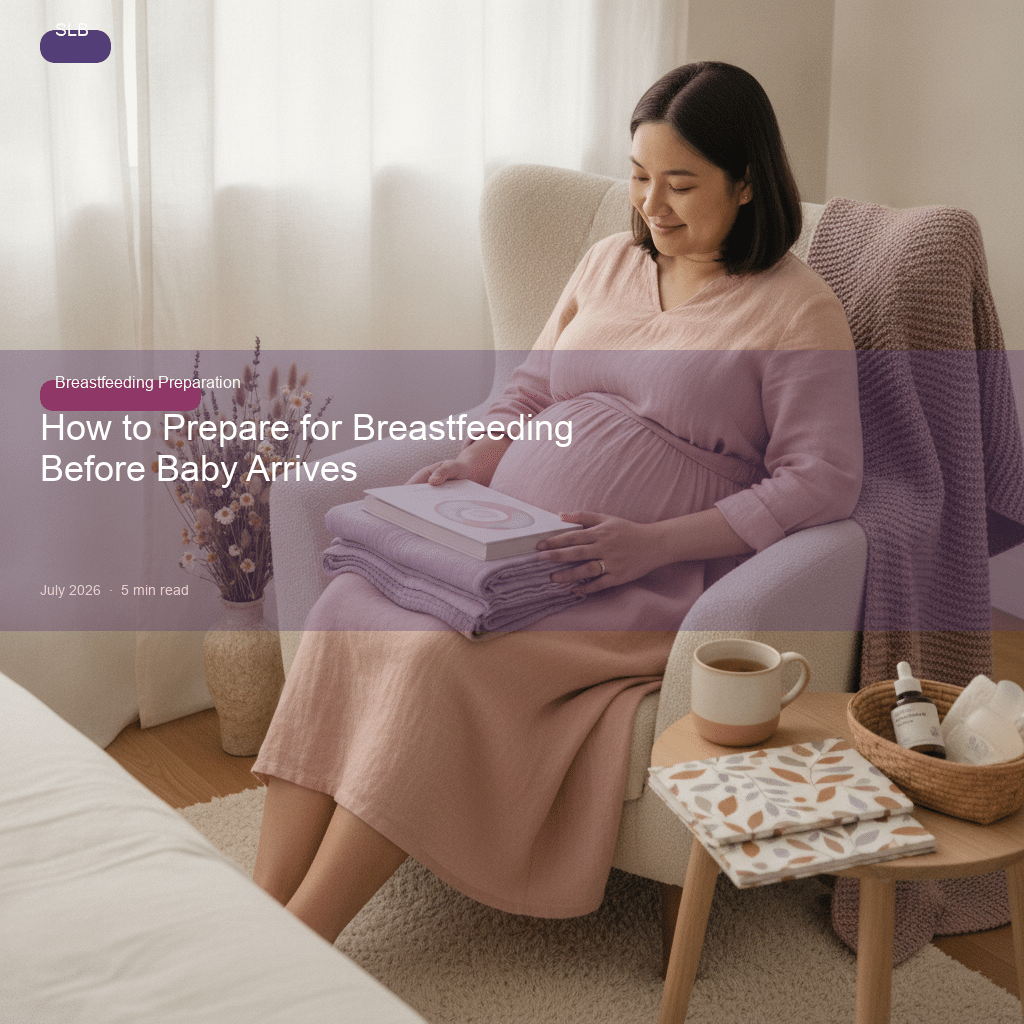
Setting up a comfortable nursing space before your due date is something small that makes a big difference in those first weeks. You do not need anything fancy. But having a few things in place means one less thing to think about when you are tired and learning on the job.
Think about a supportive chair or sofa corner where you will spend a lot of time feeding. A good nursing pillow helps you maintain a comfortable latch position without straining your back or arms. Keep a large water bottle, healthy snacks, and your phone charger within easy reach. Singapore’s heat means staying well-hydrated is especially important, both during pregnancy and while nursing.
Good lighting matters too. You will be checking latch and watching your baby’s cues often in those early days. A soft lamp nearby is much easier on tired eyes than bright overhead lights at night.
Think About Nutrition During Pregnancy to Support Lactation
What you eat during pregnancy lays a foundation for your overall wellbeing postpartum, including your breastfeeding journey. You do not need to follow a strict diet. But being aware of nourishing foods is helpful.
Foods like oats, flaxseed, fennel, brewer’s yeast, and fenugreek have long been associated with supporting lactation. These are also the wholesome ingredients found in our lactation cookies Singapore range at SLB. Stocking up before your due date means you have nourishing snacks ready and waiting the moment baby arrives.
Staying hydrated is simple but genuinely important. Iron-rich foods, healthy fats from sources like avocado and nuts, and good protein all support your body’s ability to recover and nourish your baby. Eating well during pregnancy is a form of preparation too.
Navigating Confinement Practices and Breastfeeding in Singapore
Singapore’s rich cultural traditions around confinement, whether Chinese 坐月子 (zuo yuezi), Malay berpantang, or Indian confinement practices, are deeply meaningful and worth honouring. At the same time, it helps to think through how these traditions will interact with your breastfeeding goals.
Some confinement practices encourage restricted fluid intake, which can affect hydration and milk production. Some herbal soups and tonics are wonderfully supportive of recovery and lactation. Others may be less compatible. If you are working with a confinement nanny or centre, it is worth having an honest conversation before birth about your intention to breastfeed and what support you will need.
You do not have to choose between your culture and breastfeeding. But knowing in advance where potential tensions might arise, and having a plan, makes those early weeks much smoother. An IBCLC familiar with Singapore’s cultural context can be an invaluable bridge here.
What to Have Ready Before Your Due Date
Here is a simple checklist of things worth sorting before baby arrives:
- Nursing-friendly clothing for home and outings — invest in a few comfortable pieces before birth
- A good nursing pillow to support positioning at the breast
- Nipple cream or pure lanolin for nipple care in the early days
- Burp cloths and nursing pads for leaks and general mess
- A stock of nourishing lactation snacks — our SLB lactation bakes are made with wholesome, lactogenic ingredients and are a lovely thing to have waiting for you at home
- Contact details saved for your IBCLC, polyclinic, and BMSG
- A completed birth plan that includes your breastfeeding preferences
Frequently Asked Questions About Breastfeeding Preparation in Singapore
When should I start preparing for breastfeeding?
Anytime during pregnancy is a good time to start. Many mums begin around the second trimester. Attending a class or doing some reading from 20 to 30 weeks gives you plenty of time to prepare without feeling rushed.
Can I produce milk before my baby is born?
Yes. Your body begins producing colostrum as early as 16 weeks of pregnancy. You will not typically see it leak unless you express, but it is there. Some mothers begin gentle antenatal colostrum harvesting from around 36 weeks with their doctor’s guidance.
Do KKH and NUH have lactation consultants I can see before birth?
Yes. Both KKH and NUH have IBCLC-trained lactation consultants. You can ask your OB/GYN to refer you to their lactation clinic during pregnancy, especially if you have specific concerns or conditions that may affect breastfeeding.
Will my confinement nanny support my breastfeeding?
It depends on the nanny and the agency. It is really worth discussing this in advance. Ask directly about their approach to breastfeeding and whether they have experience supporting nursing mothers. Some confinement nannies are wonderfully supportive. Others may need some gentle guidance from you.
What should I eat during pregnancy to help with breastfeeding later?
Focus on balanced, nourishing meals with good protein, healthy fats, iron-rich foods, and plenty of hydration. Ingredients like oats, flaxseed, and brewer’s yeast are commonly associated with supporting lactation and are found in many lactation-friendly snacks. Check out our breastfeeding tips for more guidance on nutrition and feeding.
You Are More Ready Than You Think
The fact that you are reading this, asking these questions, and thinking ahead already puts you in a strong position. Breastfeeding can be one of the most rewarding parts of early motherhood. It can also be one of the most challenging. Both things are true at once.
Preparing now, building your support team, stocking your fridge and pantry with nourishing things, and learning a little about how your body works, all of it adds up. You do not need to have all the answers before baby comes. You just need to know where to find help when you need it.
Singapore Lactation Bakes was founded by an IBCLC and built around the belief that every mother deserves honest, gentle support on her breastfeeding journey. Whether that is through our bakes, our blog, or simply knowing we are here, we are cheering you on.
The NHS breastfeeding advice also offers helpful, evidence-based information you can read alongside local resources as you prepare.
You have got this. And you do not have to do it alone.