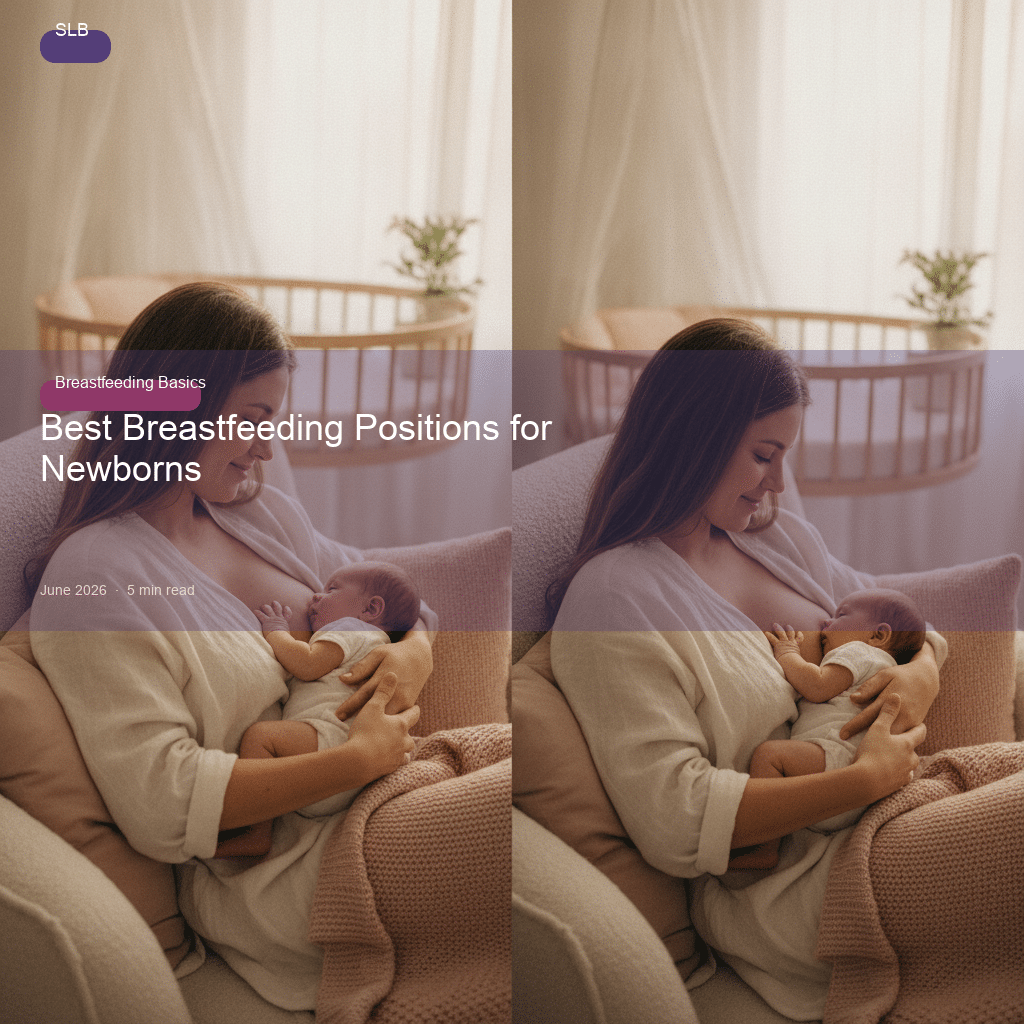
The Right Breastfeeding Positions for Your Newborn Can Change Everything
Those first few days with a newborn are a lot. You are learning so much at once. And one of the biggest things that makes breastfeeding feel hard early on is not knowing how to hold your baby comfortably. Finding the right breastfeeding positions for your newborn can reduce pain, help your baby latch better, and make those long feeds feel a whole lot more manageable.
The good news is there is no single perfect position. There are several that work really well, and you will probably end up using different ones at different times of day. This guide walks you through six of the most helpful positions, plus a latch checklist that applies to all of them. Save it, screenshot it, stick it on the wall.
And if you ever feel stuck, our IBCLC-certified team is always here to help.
—
Why Position Matters So Much in the Early Weeks
Newborns feed 8 to 12 times every 24 hours. That is a lot of time spent nursing. If your position is slightly off, even small discomforts add up quickly. Sore nipples, a tired back, a baby who keeps sliding off — these are usually position problems, not permanent problems.
A good hold helps your baby open wide and take a deep latch. A deep latch means better milk transfer. And better milk transfer means a more settled baby and a more comfortable you. The WHO breastfeeding guidelines emphasise that correct positioning and attachment are the foundation of a successful breastfeeding journey.
The most common mistake new mums make is leaning their breast toward the baby. It feels natural but it causes back and shoulder strain. Instead, bring baby to breast. Let baby come to you.
—
6 Breastfeeding Positions for Newborns — Your Visual Guide
🤱 Position 1: The Cradle Hold
Best for: Full-term newborns, daytime feeds, classic comfort
This is the position most people picture when they think of breastfeeding. Baby lies across your body, tummy to tummy, with their head resting in the crook of your arm on the same side as the breast you are feeding from.
How to do it:
- Sit upright and supported. Use a pillow behind your back and one under your arm if needed.
- Place baby across your body so their tummy faces your tummy.
- Support baby’s head in the crook of your elbow.
- Use your free hand to support your breast if needed.
- Bring baby in chin-first so their chin touches your breast before their nose.
Alt text for image: Cradle hold breastfeeding position for newborn, tummy to tummy with mother
—
🤱 Position 2: The Cross-Cradle Hold
Best for: Learning latch, small babies, early days
This one is brilliant for beginners. It gives you so much more control over baby’s head and helps you guide the latch more precisely.
How to do it:
- Hold baby with the opposite arm to the breast you are feeding from.
- Support baby’s head with your palm flat across their shoulder blades, not gripping the back of their head.
- Baby is still tummy to tummy with you.
- Use your other hand in a C-shape to support your breast.
- Aim baby’s chin toward your breast first and wait for a wide open mouth before bringing them in.
This is one of the breastfeeding latch positions most recommended by lactation consultants in Singapore hospitals like KKH and NUH for first-time mums.
Alt text for image: Cross-cradle breastfeeding position for newborn latch, showing hand placement across shoulder blades
—
🏈 Position 3: The Football Hold (Clutch Hold)
Best for: C-section recovery, large breasts, twins, flat nipples
Singapore has one of the higher C-section rates in the region. If you had a C-section, the football hold is going to be your best friend in those early weeks. Baby is tucked under your arm like a rugby ball, so there is no pressure on your incision at all.
Hold baby along your forearm with their legs tucked behind you. Support their head with your hand. Baby’s body is at your side, facing up toward the ceiling. Bring them in chin-first as always.
This position also gives you a clear view of your baby’s mouth and latch, which helps a lot when you are still learning.
Alt text for image: Football hold breastfeeding position for C-section recovery, baby tucked under mother’s arm
—
🌙 Position 4: Side-Lying
Best for: Night feeds, C-section recovery, tired mums, confinement period
During your confinement month, you will likely be doing a lot of feeding in bed. The side-lying position is designed for exactly this. You lie on your side, baby faces you on the mattress, and you nurse from the lower breast. It feels restful even during feeds.
Make sure baby is on a firm, flat surface. Their body should be in a straight line, not curled or twisted. Tuck a small rolled towel behind baby’s back if needed to help them stay in position.
Many mums find this position much easier after a C-section because it removes any pressure on the abdomen.
Alt text for image: Side-lying breastfeeding position for newborn night feeds
—
🌿 Position 5: Laid-Back (Biological Nurturing)
Best for: Newborns, overactive letdown, refluxy babies, relaxed feeding
This one follows your instincts more than any other position. You lean back in a supported recline, and baby lies tummy-down on your chest. Gravity does a lot of the work here. Baby uses their natural reflexes to find the breast and latch on.
It is especially helpful if you have a fast letdown and baby tends to choke or pull off frequently. The angled position slows the flow naturally.
Singapore’s warm climate makes skin-to-skin nursing feel very comfortable year-round, and this position naturally lends itself to lots of lovely skin-to-skin contact.
Alt text for image: Laid-back biological nurturing breastfeeding position for newborn on mother’s chest
—
🐨 Position 6: Upright / Koala Hold
Best for: Older newborns, reflux, discreet public nursing
In the koala hold, baby sits upright straddling your thigh and feeds in an upright position. This works better for babies with a little more head control, so it is more common from around 4 to 6 weeks onward.
It is also one of the most discreet positions for nursing in public, which many Singapore mums appreciate when feeding at malls, hawker centres, or family gatherings. Breastfeeding in public is encouraged and legally protected here, so feed with confidence wherever you are.
Alt text for image: Koala upright breastfeeding position for older newborn, baby sitting on mother’s thigh
—
The Latch Checklist — Applies to Every Position
Whatever hold you use, these signs tell you the latch is right.
- ✅ Baby’s chin is touching your breast
- ✅ Baby’s mouth is open wide, like a yawn
- ✅ You can see more areola above baby’s top lip than below
- ✅ Baby’s lips are flanged outward, not tucked in
- ✅ Baby’s nose is clear of the breast
- ✅ You hear swallowing, not just sucking
- ✅ You feel a strong tug, not a sharp pain
- ✅ Baby’s whole body faces yours, tummy to tummy
If something feels wrong, gently break the latch with your finger and try again. It takes practice. Be kind to yourself.
You can find more gentle guidance on our breastfeeding resources page or reach out to a lactation consultant for personalised support.
—
The Best Position for Breastfeeding Is the One That Works for You
There is no single best position breastfeeding experts would unanimously agree on. Every mum and baby pair is different. What matters most is that you feel supported, your baby is tummy to tummy with you, their chin leads into the breast, and they can open wide.
Try a few. See what feels right. You will likely settle into a favourite for daytime and a different one for night. That is completely normal.
While you are navigating all of this in those early weeks, make sure you are nourishing yourself too. Long nursing sessions take energy. Our SLB lactation bakes are made to be easy one-handed snacks during feeds, so you can stay fuelled without having to put baby down. Made with wholesome galactagogue-friendly ingredients to support your breastfeeding journey.
—
Frequently Asked Questions
What is the best breastfeeding position for a newborn?
There is no single best position. The cross-cradle hold and football hold are popular for beginners because they give you more control. The most important thing is that baby is tummy to tummy with you and their chin leads into the breast. Try a few and see what feels comfortable.
How do I know if my breastfeeding latch position is correct?
A good latch feels like a strong pulling sensation, not sharp pain. Baby’s mouth should be open wide, chin touching your breast, lips flanged out, and you should hear regular swallowing. Check our latch checklist above for a quick reference.
What breastfeeding position is best after a C-section?
The football hold and side-lying position are both excellent after a C-section because they keep baby away from your incision area. Many Singapore mums who have had C-sections find the football hold especially useful in the first two weeks of recovery.
Can I breastfeed lying down with a newborn?
Yes. The side-lying position is safe and comfortable for newborns when done correctly on a firm, flat surface. It is a favourite during night feeds and the confinement period. Always make sure baby has a clear airway and their body is in a straight line.
How do I stop my newborn from slipping off during breastfeeding?
This usually comes down to support. Make sure you are supporting baby’s whole body, not just their head. Use pillows to bring baby up to breast height. Baby’s feet should have something to rest or push against. Bringing baby in chin-first also helps them stay engaged on the breast.
Still feeling unsure? The NHS breastfeeding advice has great visual guidance too, and our team is always a message away.