Flying with Breast Milk from Singapore: What You Need to Know First
You have a trip coming up. Maybe it is a work trip to Melbourne. Maybe it is a family visit back to London. Maybe it is just a short hop to KL. Whatever it is, one thought keeps coming back to you: what do I do with my breast milk?
Flying with breast milk can feel overwhelming before you do it the first time. There are so many questions. Will security make you throw it away? Do you need your baby with you? How do you keep it cold for a twelve-hour flight? We hear these worries all the time from Singapore mums, and the good news is that it is much more straightforward than it looks.
This guide covers everything you need to know about flying with breast milk from Singapore, including Changi Airport rules, how to pack your milk, which airlines allow what, and how to keep your supply going when your routine is completely upended.
Changi Airport Breast Milk Rules: The Basics
Breast milk is classified as a medically necessary liquid. That means it is exempt from the standard 100ml liquid restriction that applies to toiletries and drinks. You do not need to put it in a tiny zip-lock bag with your shampoo. It travels separately and in larger quantities.
This applies at Changi Airport across all four terminals, and it aligns with the rules at most major international airports including those in the USA, UK, and Australia.
Here is what to expect when you go through security at Changi:
- Declare your breast milk at the security checkpoint. Simply tell the officer you have breast milk in your bag.
- Officers may inspect the containers visually or use test strips. This is routine and nothing to worry about.
- You cannot be forced to taste your milk or throw it away.
- If you prefer a different method of testing, you can request it.
- Frozen or slushy ice packs are permitted. Completely liquid ice packs may be flagged, so freeze them solid at least 24 hours before you leave home.
Changi security staff are generally well-trained for situations like this. Declaring upfront and being calm tends to make the whole process quick and smooth. Build in a little extra time before your flight just in case.
Can You Fly with Breast Milk Without Your Baby?
Yes. Absolutely yes. This is one of the most common questions we get, and the answer is clear: you do not need your baby to be travelling with you to bring breast milk through security. Expressed milk is permitted regardless of whether your child is on the same flight or back home with your partner.
This matters enormously for working mothers who travel for business and need to continue pumping and bring their milk home. Your milk is yours to carry. Full stop.
How Much Breast Milk Can You Bring on a Plane?
There is no official fixed limit stated by most aviation authorities, including CAAS. The general guidance is that the quantity should be reasonable and proportionate to the length of your journey.
If you are carrying a large amount, for example after a week-long work trip, it is worth having a short note from your doctor or lactation consultant. It is not a requirement, but it can help things move faster if a security officer has questions. Our IBCLC-certified team can help you with that kind of documentation and support if you need it before your trip.
How to Keep Breast Milk Cold When You Fly
Keeping your milk at a safe temperature during travel is where most of the planning happens. Here is how to approach it.
Insulated Cooler Bags
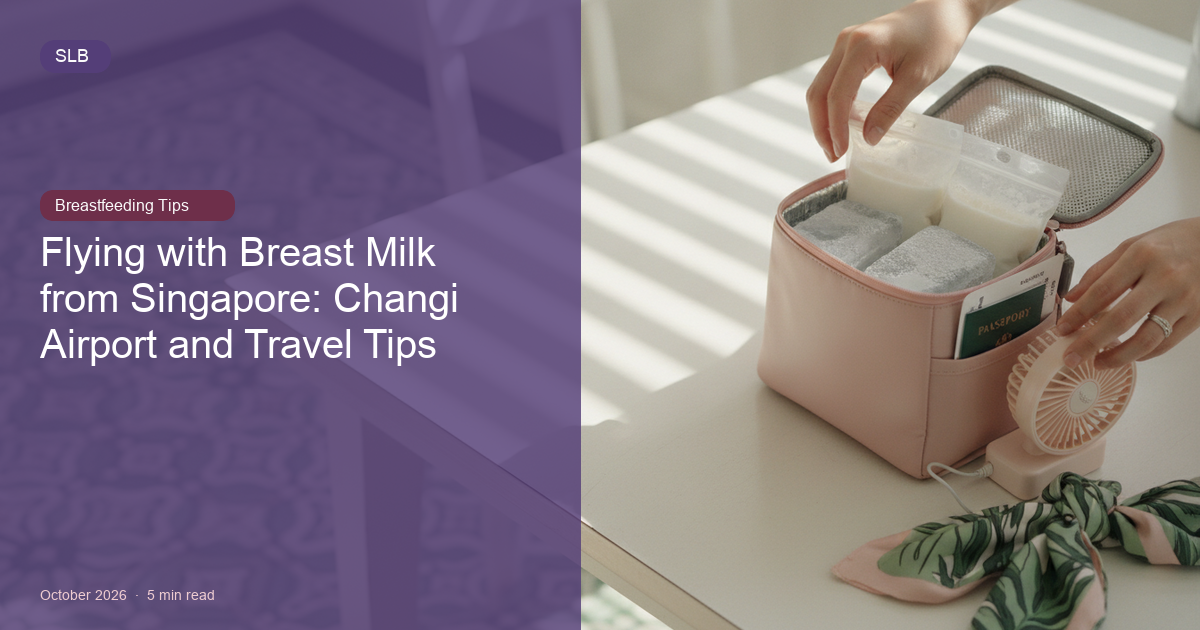
A good quality insulated cooler bag is your best friend for travel. Brands like Medela and Tommee Tippee are available in Singapore through Guardian, Mothercare, Lazada, and Amazon.sg. Pack your milk in a well-insulated bag and keep it in your carry-on luggage wherever possible. The temperatures in the checked baggage hold can be unpredictable and are not always cold enough to be reliable.
Ice Packs
Freeze your ice packs at least 24 hours before you travel. Frozen or slushy ice packs are permitted through security. Completely melted packs may be treated as a liquid and flagged. If your ice packs have melted by the time you land, Changi and most major airports have shops where you can buy ice or replacement packs.
Dry Ice
Dry ice is an option for very long journeys, but it comes with its own rules. Most airlines cap it at 2.5kg per passenger and require you to declare it. You can source dry ice in Singapore from Cold Storage or Giant supermarkets, or from specialist logistics suppliers. Always confirm your airline’s specific policy before you travel.
The Galley Fridge
On longer flights, you can ask a cabin crew member whether there is space in the galley refrigerator to store your milk. This is not a guaranteed service, but it is often accommodated, especially on Singapore Airlines long-haul routes. Ask when you board rather than during meal service.
Airline Policies: Singapore Airlines, Scoot, and Jetstar Asia
All three major carriers operating out of Singapore, Singapore Airlines, Scoot, and Jetstar Asia, permit breast milk as a medical liquid. That said, policies can differ in the finer details, and they do get updated. Always check directly with your airline before you fly, especially if you are carrying frozen milk or dry ice.
Singapore Airlines is generally regarded as one of the more accommodating carriers for breastfeeding mothers. Their crew on long-haul routes tend to be experienced with galley fridge requests.
International Rules by Destination: A Quick Reference
Most countries you are likely to fly to from Singapore follow similar rules, but it helps to know what to expect before you land.
- USA: The TSA explicitly allows breast milk in unlimited quantities. No baby required. Declare at security and screening is straightforward.
- UK: The CAA follows EU exemptions for medical liquids. Breast milk is permitted in quantities beyond 100ml when declared.
- Australia: CASA treats breast milk as a medical liquid. Declare it and it is typically permitted without issue.
- Japan and Korea: Both generally follow ICAO guidelines. Declare your milk and it is usually waved through without problems.
- Hong Kong: Similar to Japan and Korea. Declare and proceed.
- Malaysia: Breast milk rules also apply on short regional flights with carriers like AirAsia and Firefly, which is relevant for travel between Singapore and Penang or KL.
If you are travelling somewhere not on this list, a quick check of that country’s aviation authority website before you go will give you peace of mind.
Nursing Rooms at Changi Airport
All four terminals at Changi have dedicated nursing rooms with private spaces for feeding and expressing. Terminal 3 has particularly spacious rooms and T4, being newer, is very well-equipped. You can find the exact locations using the nursing room locator on the Changi Airport website.
If you have a long wait before your flight, using the nursing room to express before boarding means you arrive at your destination with fresh milk and a more comfortable journey. It also helps you keep your supply consistent, which matters especially on stressful travel days.
Packing Checklist for Flying with Breast Milk
Run through this before you leave for the airport.
- Breast milk storage bags or sealed hard containers, double-bagged to prevent leaks from cabin pressure
- Labels on every bag showing the date expressed and volume
- Ice packs frozen solid at least 24 hours before departure
- Insulated cooler bag packed into your carry-on luggage
- Dry ice declared to your airline if you are using it
- A note from your doctor or lactation consultant if carrying a large quantity
- A plan for where you will pump or express during the trip
- Research done on storage facilities at your destination hotel or accommodation
Maintaining Your Supply While You Travel
This is the part that does not get talked about enough. The logistics of carrying milk are one thing. Keeping your supply going while you are jet-lagged, stressed, eating differently, and in a completely different routine is another.
Travel disrupts everything, and your body notices. Stress, dehydration, irregular pumping schedules, and poor sleep can all affect how your body responds. The WHO breastfeeding guidelines remind us that frequent, consistent milk removal is one of the key factors in maintaining supply, so try to pump or nurse as close to your usual schedule as you can, even when crossing time zones.
Staying hydrated and eating nourishing food matters too. Airports and business travel do not always make that easy, which is why many Singapore mums pack their own snacks. Our lactation cookies Singapore mums love are easy to slip into a carry-on bag. Made with oats, brewer’s yeast, and flaxseed, they are a comforting, nourishing snack for travel days when you need something familiar that supports your breastfeeding journey.
If you are struggling with supply before or after a big trip, our breastfeeding tips section has plenty of gentle guidance to help you find your footing again.
Frequently Asked Questions About Flying with Breast Milk
Do I need to put breast milk in the 1-litre liquid bag at security?
No. Breast milk is exempt from the standard liquid restrictions and does not need to go in the clear zip-lock bag with your toiletries.
Will security at Changi make me taste my breast milk?
No. You cannot be required to taste your milk. Changi security follows international standards for medical liquids.
Can I express milk on the plane?
Yes. You can express discreetly in your seat or use the aircraft lavatory if you prefer more privacy. Using the nursing room at Changi before your flight means you may need to express less during the flight itself.
What if my flight is delayed and my milk gets warm?
Frozen milk will stay cold longer in a well-insulated cooler bag. Keep the bag closed as much as possible. Most shops at Changi sell ice if you need to top up your cooling. If you are at a gate with a long delay, ask airport staff about refrigeration options.
Can I check breast milk in my luggage instead of carrying it on?
You can, but it is not recommended. Baggage hold temperatures are not always reliably cold. Carry your milk in your hand luggage where possible so you have full visibility and control over its temperature throughout the journey.
Do I need a doctor’s letter to bring breast milk on a plane?
Not usually. But if you are carrying a large quantity relative to your journey length, a note from a doctor or IBCLC can help security understand the context quickly.
You Have Got This
Flying with breast milk from Singapore is genuinely manageable once you know the rules. Changi is well set up for breastfeeding mothers, the airlines are generally accommodating, and most of the world follows similar guidelines when you land. The anxiety tends to be bigger than the actual experience.
Prepare your cooler bag, freeze your ice packs, declare your milk at security, and go. And if you want a little extra support for your breastfeeding journey on the road, our SLB lactation bakes travel beautifully in a carry-on. Safe travels, mama.