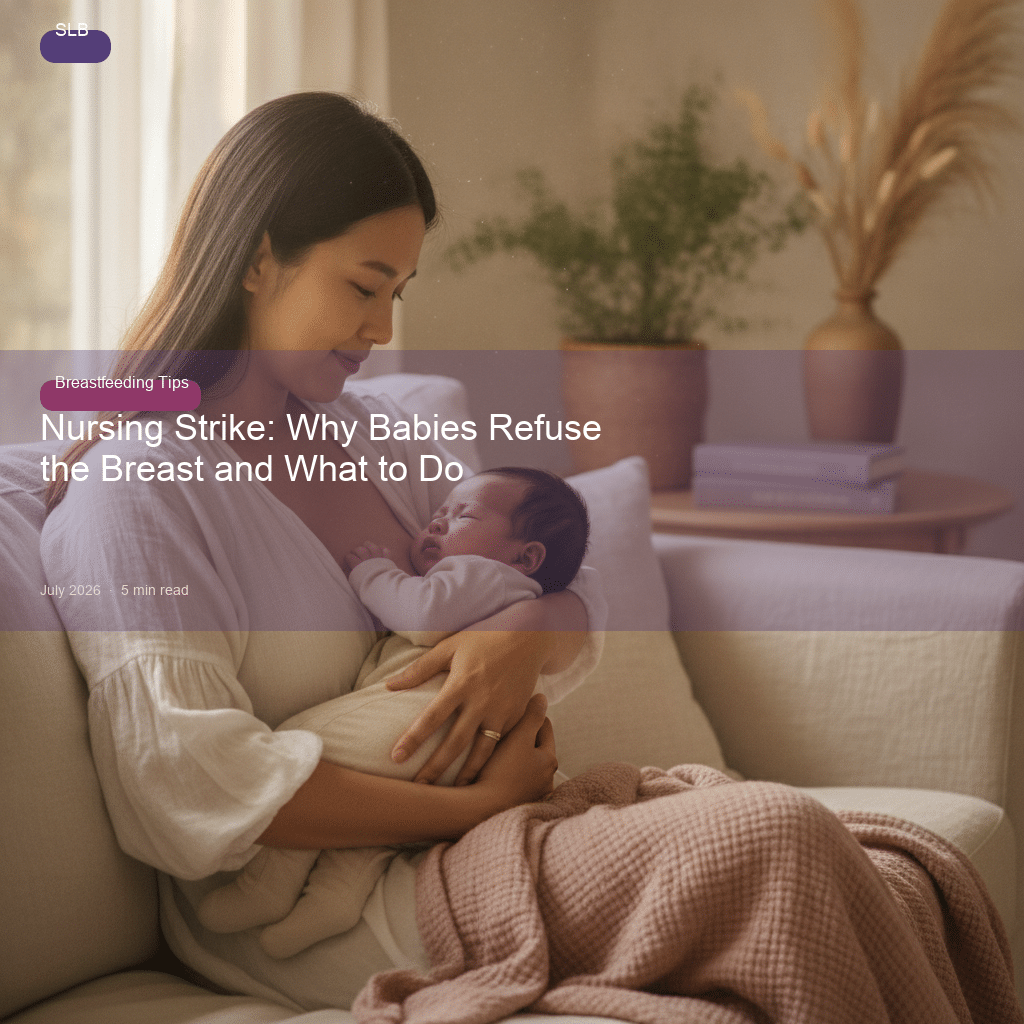
Your Baby Refused the Breast Today. Here Is What That Means.
One feed was fine. The next, your baby turned away, arched their back, or just cried at the breast. Now you are panicking, wondering if this is the end of your breastfeeding journey. Take a breath. What you are most likely experiencing is a nursing strike, and it is far more common than you think.
A nursing strike baby is not a baby who is done breastfeeding. It is a baby who is telling you something is wrong, and with the right approach, most strikes resolve within a few days to two weeks. This guide will walk you through everything you need to know, from understanding why it happens to gentle, practical steps to bring your baby back to the breast.
What Is a Nursing Strike?
A nursing strike is when a baby who has been breastfeeding well suddenly refuses the breast. It is not gradual. It often feels like it comes out of nowhere. Babies can go on strike at any age but it is most common between three and eight months old.
Nursing strikes typically last anywhere from a few days to around two weeks. With patience and consistent effort, the vast majority of babies return to breastfeeding. You have not lost your milk. Your baby has not forgotten how to latch. Something has made feeding feel uncomfortable, frustrating, or unfamiliar, and your job is to gently figure out what that is.
For broader guidance on breastfeeding duration and what is normal, the WHO breastfeeding guidelines recommend breastfeeding for at least two years and beyond, which is a helpful reminder that one difficult week does not have to mean the end.
Nursing Strike vs Self-Weaning: How to Tell the Difference
This is the question every mother in a nursing strike asks first. Is my baby weaning?
Almost certainly not. Self-weaning is gradual. It happens slowly over weeks or months, usually after twelve to eighteen months of age. Your baby does not just switch off overnight. A sudden, distressed refusal of the breast in a baby under a year old is almost never self-weaning. It is a strike, and that is an important distinction because it means you can do something about it.
Why Is My Baby Refusing the Breast? Common Causes
There is usually a reason behind a nursing strike, even if it takes a little detective work to find it. Here are the most common causes.
Teething Pain
Teething is one of the most frequent triggers. When a baby’s gums are sore and swollen, sucking creates pressure that hurts. Baby bites down, feels discomfort, and starts to associate feeding with pain. If your baby is drooling heavily, chomping on everything, and fussier than usual, teething may be the culprit. Try gently massaging their gums with a clean finger before a feed to ease the discomfort first.
Illness or Ear Infection
An ear infection makes the jaw movement during nursing painful. A sore throat makes swallowing uncomfortable. Nasal congestion means your baby cannot breathe through their nose while latched, so they keep pulling off to gasp. If your baby has had a fever, seems unwell, or is tugging at their ear, get them checked by a doctor.
Oral Thrush
This one is particularly relevant in Singapore. Our year-round heat and humidity create the perfect conditions for fungal overgrowth. Oral thrush causes white patches on your baby’s tongue and inner cheeks and makes feeding painful. If you notice those patches, speak to your PD or GP. It is very treatable but it needs to be addressed before your baby will comfortably return to the breast.
Overstimulation and Stress
Singapore family life can be wonderfully busy. But CNY gatherings, Hari Raya visits, or weekends passed between excited relatives can genuinely overwhelm a young baby. When babies are overstimulated, feeding becomes one more sensory input they cannot manage. A quieter environment often helps significantly.
Change in Milk Taste
Your milk can taste different if your period has returned, if you are in the early stages of a new pregnancy, or if your diet has changed significantly. During the confinement period, certain herbal foods or dietary restrictions can also alter milk taste, which sometimes surprises babies used to a familiar flavour.
Distraction
Around four to six months, babies wake up to the world. Everything is fascinating. Feeding feels boring when there are ceiling fans, siblings, and interesting noises to pay attention to. Your baby is not rejecting you. They are just extremely interested in everything else right now.
Flow Frustration
If your letdown is very strong and fast, your baby may be pulling off to avoid being overwhelmed. If your supply is lower than usual and the flow feels slow, your baby may get frustrated waiting. Both can trigger a strike.
Routine Disruption
Return to work after maternity leave, travel, a new childcare arrangement, or even a shift in your daily schedule can unsettle a baby enough to trigger breast refusal. Singapore mums returning to work after sixteen weeks maternity leave often find this period particularly tricky.
How Long Does a Nursing Strike Last?
Most nursing strikes last between two and five days. Some go on for up to two weeks. It rarely lasts longer than that when a mother continues offering the breast with patience and without pressure. Every day you keep trying, every skin-to-skin cuddle you offer, and every quiet feed attempt you make is moving things in the right direction.
What to Do During a Nursing Strike: Gentle Solutions That Work
1. Keep Calm and Remove All Pressure
The harder you push, the more your baby resists. Forcing the issue increases stress for both of you and makes the breast feel like a battleground. Approach every feed attempt with gentleness and zero expectation. If baby refuses, put them down, cuddle them, and try again later.
2. Try Feeding When Baby Is Drowsy
The sucking reflex is strongest when a baby is half-asleep. Try offering the breast just as your baby is drifting off for a nap or first thing when they wake in the night, before they are fully alert. Many mothers find this is the first successful feed during a strike.
3. Use Skin-to-Skin Contact
Strip both of you down and hold your baby against your chest. Skin-to-skin releases oxytocin in both of you, regulates your baby’s nervous system, and reestablishes the comfort and safety they associate with you. Do this without any expectation of feeding. Just be close. Feeds often follow naturally.
4. Feed in a Calm, Dim Space
Take yourself away from the busy living room, noisy fan, or well-meaning relatives. A quiet room with low lighting removes the distractions that make a sensitive or overstimulated baby pull off. Singapore homes can be wonderfully lively, but your baby may need a calmer space right now.
5. Try a Different Position
The laid-back breastfeeding position, sometimes called biological nurturing, has your baby lying tummy-down on your chest while you recline. Gravity helps them stay on, and it feels instinctively safe for many babies. Walking around gently while nursing also works well for babies who are soothed by motion.
6. Address the Underlying Cause
If you suspect teething, massage gums before feeds. If congestion is an issue, use saline nasal drops to clear their airway before latching. If thrush is visible, treat it with your doctor’s guidance. You cannot fully resolve a strike without tackling the root cause.
7. Maintain Your Milk Supply
This is crucial. If your baby is not feeding at the breast for several days, your supply will naturally start to decrease due to reduced demand. Hand express regularly to relieve engorgement, signal your body to keep producing, and protect your supply for when your baby is ready to return.
Your nutrition and hydration matter here too. In Singapore’s heat it is easy to forget to drink enough water. Stay hydrated, eat regularly, and give your body the nourishment it needs. Many mothers going through a nursing strike find comfort and practical support in SLB lactation bakes, made with ingredients like oats, flaxseed, and brewer’s yeast that have traditionally been used to support breastfeeding mothers. When direct nursing is reduced, keeping your body nourished matters more than ever.
You can also explore our full range of breastfeeding resources for more guidance on protecting your supply through challenging periods.
Keeping Your Supply Going When Baby Won’t Latch
A nursing strike is stressful. Stress itself can affect your let-down reflex and reduce how much milk your body makes. So beyond the practical steps above, giving yourself permission to rest, eat well, and be kind to yourself is genuinely part of the solution.
Warm, nourishing foods and drinks help. Staying calm helps. And having something comforting that also supports your breastfeeding journey can make a hard few days feel slightly more manageable. Our lactation cookies Singapore mums love are made to nourish and comfort you during exactly these kinds of moments.
When to See a Lactation Consultant or Doctor
Some nursing strikes need professional support. Reach out to a lactation consultant or your baby’s doctor if:
- Your baby has not had enough wet nappies in 24 hours
- Your baby appears unwell, feverish, or in pain
- You can see white patches in your baby’s mouth
- The strike has lasted more than five days with no improvement
- You are experiencing significant engorgement or pain
- You feel your mental health is being affected
Singapore has excellent lactation support available. KKH, NUH, Thomson Medical, and Mount Alvernia all have lactation services. You can also reach out to our IBCLC-certified team at SLB for personalised guidance and support.
The AAP breastfeeding recommendations also emphasise that early, consistent support from a qualified professional makes a real difference in breastfeeding outcomes.
Frequently Asked Questions About Nursing Strikes
Is a nursing strike the same as weaning?
No. Weaning is gradual and usually happens after twelve months. A nursing strike is sudden and temporary. Most babies return to the breast within a few days to two weeks.
Can teething really cause a nursing strike?
Yes. Teething is one of the most common triggers. Sore gums make the pressure of sucking painful. Massaging the gums before feeds and staying patient usually helps.
My baby unlatches and screams during breastfeeding. Is this a nursing strike?
It can be the beginning of one, especially if it starts happening consistently. It can also signal an ear infection, reflux, or a strong letdown. Watch for a pattern and check in with your doctor or lactation consultant if it persists.
How do I keep my milk supply up if my baby won’t feed?
Hand express regularly to maintain supply and relieve discomfort. Stay hydrated, eat well, and consider nourishing lactation foods to support your body while nursing is reduced.
Will the nursing strike resolve on its own?
Often yes, especially with a calm, low-pressure approach. But addressing the underlying cause speeds things up significantly. If you are not seeing improvement after a few days, professional support is a good idea.
My baby won’t latch but seems hungry. What do I do?
Try offering the breast in a calm environment when baby is drowsy. Use skin-to-skin contact to rebuild comfort. If you are concerned about adequate intake, contact a lactation consultant who can assess the situation and guide you safely.
You Are Not Failing. This Is Temporary.
A nursing strike feels personal. It can feel like rejection. But your baby is not rejecting you. They are communicating discomfort the only way they know how. With patience, skin-to-skin contact, and gentle persistence, most nursing strikes resolve and breastfeeding continues.
Keep nourishing yourself through this. Keep reaching for support when you need it. And know that every quiet cuddle, every gentle feed attempt, every warm bite of something nourishing is an act of love for both of you.
You have got this.
Need one-to-one support? If baby keeps refusing the breast, a lactation consultant can help you work through the strike.
Book a Consultation