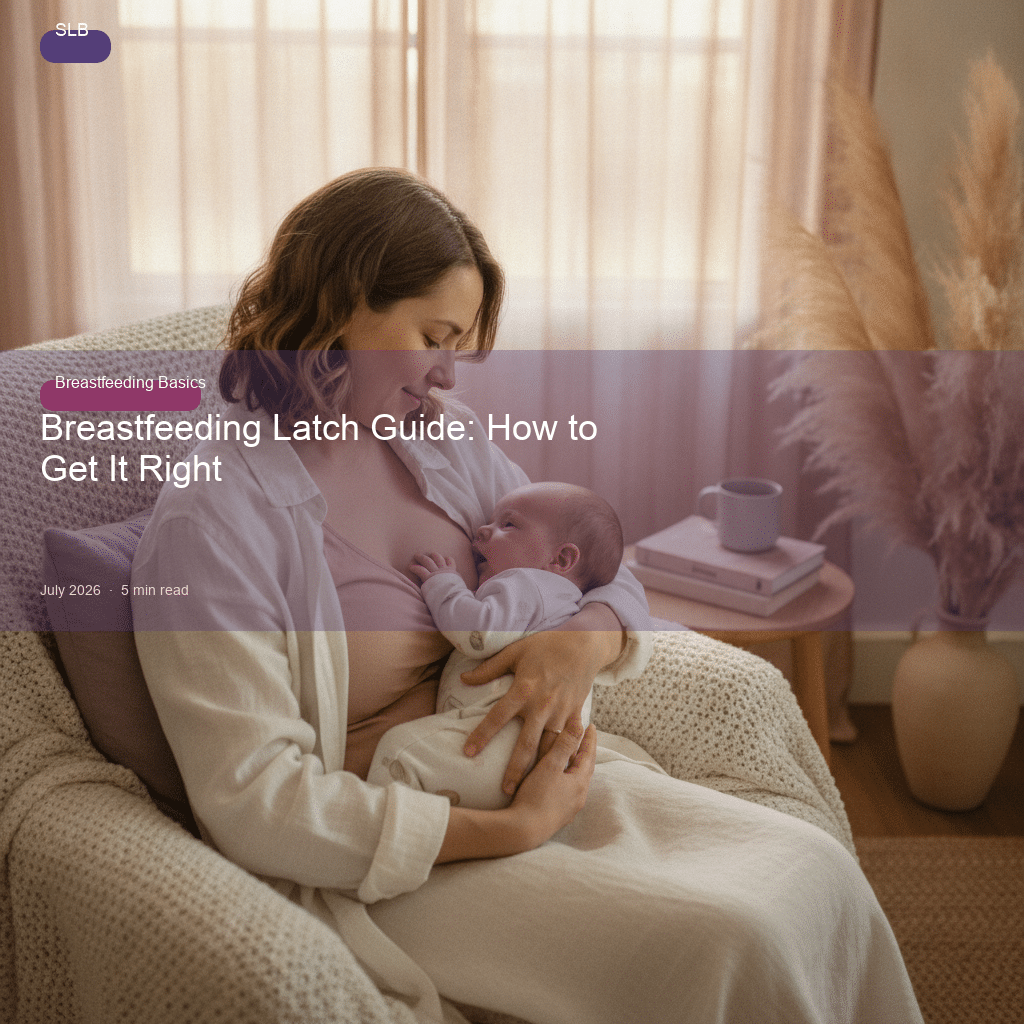
Your Breastfeeding Latch Guide: Everything You Need to Know
If breastfeeding feels painful, exhausting, or like something is just not quite right, the latch is usually where the answer lives. A good latch means your baby can drink comfortably and efficiently. It also means you are not in agony every feed. This breastfeeding latch guide is here to walk you through it gently, step by step, with Singapore’s real home environment in mind.
You are not doing it wrong. You are just still learning. And that is completely okay.
For more reassurance and practical tips along the way, browse our breastfeeding resources written by mums who get it.
—What Is a Breastfeeding Latch?
The latch is how your baby attaches to your breast during a feed. It is not just the nipple your baby needs to take in. A proper latch involves a good portion of the areola too. When your baby latches deeply, the nipple sits far back in their mouth, away from the hard palate, so feeding is comfortable for you and effective for them.
A shallow latch, on the other hand, means baby is mostly on the nipple tip. That causes pain for you and means less milk gets transferred to baby. Many Singapore mothers who feel they have low milk supply are actually experiencing a latch issue, not a supply one.
According to the WHO breastfeeding guidelines, exclusive breastfeeding for the first six months is recommended, and a correct latch is the foundation that makes that possible.
—How to Latch Baby Breastfeeding: Step by Step
Step 1: Get Comfortable First
Sit or lie in a position where your back and arms are supported. In Singapore’s HDB flats, the bed or a firm sofa with a nursing pillow works beautifully. Tension in your body passes to your baby. Relax your shoulders before you begin.
Step 2: Align Nose to Nipple
Hold your baby so their nose, not their mouth, is level with your nipple. This encourages them to tilt their head back slightly and open wide. Think of how you tilt your own head back to take a big bite of something. Same idea.
Step 3: Shape Your Breast If Needed
Use a C-hold or U-hold to gently shape your breast so it matches the angle of your baby’s mouth. This is especially helpful if you have flat or inverted nipples or if your breasts are very full. Do not squeeze hard. Just guide gently.
Step 4: Wait for the Wide Open Mouth
Touch your nipple to your baby’s upper lip. Wait. Let them open really wide, like a big yawn. Do not rush this step. A wide-open mouth is what allows for a deep, asymmetric latch.
Step 5: Bring Baby to Breast, Not Breast to Baby
Once the mouth is wide open, bring your baby quickly toward your breast. Aim the nipple toward the roof of their mouth. More areola should be covered below the nipple than above. This asymmetric latch is what you are going for.
Signs of a Correct Latch Breastfeeding Checklist
✅ Green Flags: Good Latch
- No nipple pain after the first 30 seconds
- Baby’s lips are flanged outward, not tucked in
- Cheeks look round and full, not dimpled
- You can hear or see swallowing
- Nipple looks round after feeding, not flattened or creased
- Baby seems satisfied and settles after feeds
- You feel a drawing or tugging sensation, not a sharp pinch
❌ Red Flags: Poor or Shallow Latch
- Nipple pain throughout the entire feed
- Clicking or smacking sounds during feeding
- Dimpled or sucked-in cheeks
- Nipple looks flattened, lipstick-shaped, or creased after
- Baby seems unsettled, frustrated, or keeps slipping off
- Cracked, bleeding, or very sore nipples
- Baby feeds constantly but seems unsatisfied
If you are ticking more red flags than green, please do not give up. A latch can be corrected. It often just takes one session with a lactation consultant to turn things around completely.
—Best Nursing Positions for Singapore Newborns
🤱 Cradle Hold
Classic and familiar. Baby lies across your front, tummy to tummy. Great for when feeding is going well and you want a relaxed daytime feed on the sofa or nursing chair.
🤲 Cross-Cradle Hold
You support baby’s head with the opposite hand to the breast you are feeding from. This gives you much more control over positioning. Ideal for newborns and early latch struggles.
🛏️ Side-Lying
Both you and baby lie on your sides, facing each other. Perfect for night feeds and post-C-section recovery. In a Singapore HDB setting where bed space is practical, this is a favourite for tired mums.
A quick tip specific to Singapore’s weather: when it is humid and both you and baby are sweaty, latch breaks happen more often. Try feeding in an air-conditioned room if you can, or use a light muslin cloth between your skin and baby’s body to reduce slipping.
—Quick Fix: Top 3 Latch Problems Solved
Problem 1: Baby Keeps Slipping Off the Breast
Why it happens: Baby is not getting deep enough on the latch, or your breast is very full and firm.
Fix: Try softening a very full breast by hand-expressing a small amount before latching. Then use the cross-cradle hold for more control. Make sure baby’s body is turned fully toward you, tummy to tummy, with ears, shoulders, and hips in a straight line.
Problem 2: Nipple Pain That Does Not Ease
Why it happens: A shallow latch puts all the pressure on the nipple tip instead of spreading it across the areola.
Fix: Break the suction gently by sliding a clean finger into the corner of baby’s mouth before unlatching. Never pull baby off directly. Reposition and try again, waiting for a wider mouth opening before bringing baby to the breast.
Problem 3: Baby Frustrated at the Breast
Why it happens: Baby may be very hungry and the let-down has not started yet, or the latch angle is making it hard for them to swallow efficiently.
Fix: Try feeding before baby reaches peak hunger. A calm baby latches better than a crying one. Gentle breast compressions during feeding can also help the milk flow more easily while latch is being established.
A Note for Singapore Mums During Confinement
If you are in your confinement period and receiving advice from a confinement nanny or family members that feels different from what your hospital nurse told you, you are not alone. This tension is really common. Traditional practices and modern lactation guidance do not always match, and it can feel confusing and overwhelming.
Trust your instincts. And if something feels off with your latch, seek help from someone trained specifically in breastfeeding support. You do not have to figure it all out alone during those first weeks.
—When to Seek Breastfeeding Latch Help
Please reach out sooner rather than later if you notice any of these:
- Nipple pain that continues beyond the first few days
- Cracked, bleeding, or blistered nipples
- Baby losing more than 10% of birth weight without signs of recovery
- Fewer than 6 wet nappies per day after day 4 to 5
- You feel dread before every feed
In Singapore, you have real and accessible support options:
- Polyclinics: HPB-trained lactation nurses are available at no cost
- KKH, NUH, and TMC: All have lactation consultants on staff
- Private IBCLCs: For home visits or in-person sessions
Our IBCLC-certified team at Singapore Lactation Bakes understands what you are going through. We are here not just with food and drinks, but with real knowledge and care for your journey.
—Nourishing Yourself While You Work on Latch
Getting the latch right takes energy. So does recovering from birth and feeding a newborn around the clock. When your body is nourished, your let-down tends to feel easier and your feeds can go more smoothly. Our lactation cookies Singapore mums love are made to nourish and comfort you through exactly this season. They are not a magic fix. They are a warm, practical way to support your breastfeeding journey while you and your baby find your rhythm together.
The NHS breastfeeding advice is clear that maternal nutrition and self-care genuinely matter during the breastfeeding period. Looking after yourself is part of looking after your baby.
—Frequently Asked Questions
How do I know if my baby is latching correctly?
Look for round cheeks, outward-flanged lips, and audible swallowing. You should feel a tugging sensation, not a sharp pinch. After the feed, your nipple should look round, not flattened or creased.
When does breastfeeding latch stop hurting?
Some initial tenderness in the first few days is normal as your nipples adjust. But sharp, ongoing pain throughout a feed is usually a sign of a shallow latch and should be addressed. With the right support, many mums see a big improvement within just a day or two of correcting the latch.
How to latch a baby with flat nipples in Singapore?
The breast sandwich technique (C-hold or U-hold) helps shape the breast for easier latching
Need one-to-one support? Still struggling with the latch? A lactation consultant can assess feeding in person or online and help you fix it.
Book a Consultation