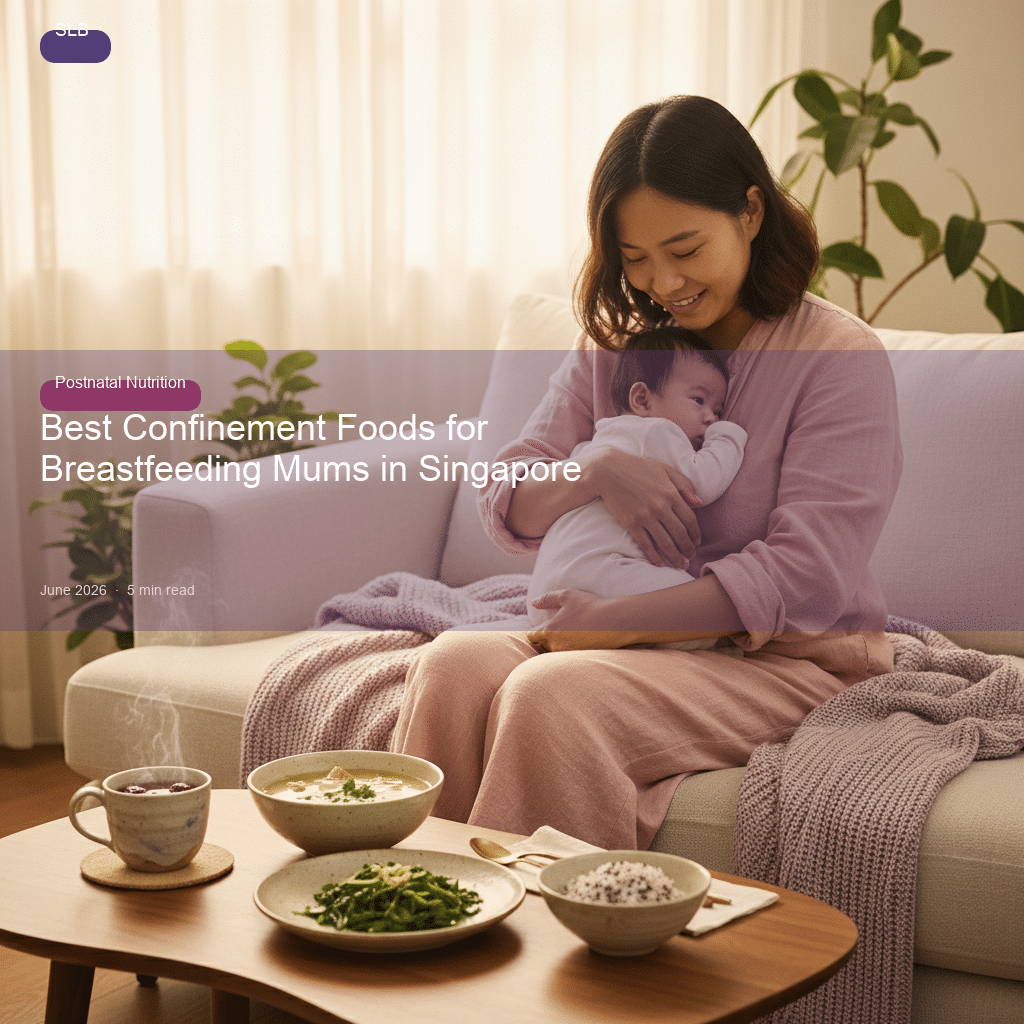
Why Confinement Food Matters So Much for Breastfeeding Mums
The first few weeks after birth are tender and exhausting. Your body just did something extraordinary. And if you are breastfeeding, it is working hard around the clock to produce milk for your baby too.
That is why confinement food Singapore breastfeeding mums eat during this period matters more than most people realise. What you eat directly affects your energy, your recovery, and your ability to keep going through those long nights and cluster feeding stretches.
According to the WHO breastfeeding guidelines, exclusive breastfeeding is recommended for the first six months of life. Getting your nutrition right during confinement gives you the strongest foundation to reach that goal.
In Singapore, confinement traditions come from Chinese, Malay, and Indian roots. Each culture has its own wisdom about what a new mum needs. The beautiful thing is that so many of these traditional foods overlap with what modern nutrition science also recommends. This list brings together the best of both worlds.
Whether you have a confinement nanny cooking for you, a caterer delivering meals, or a helper in the kitchen, here are the foods worth prioritising. And if you need something quick and nourishing between meals, our SLB lactation bakes were made exactly for moments like that.
—
Confinement is a great deal to take in at once.
If feeding is not going the way you had hoped in those first few weeks, early support tends to make the biggest difference. Joanna Goy is an IBCLC in Singapore and visits at home island wide, often at same day notice. See how a consultation works.
10 Best Confinement Foods for Breastfeeding Mums in Singapore
1. Green Papaya Fish Soup
This is probably the most well-known confinement food lactation dish in Singapore. Green papaya has been used for generations across Chinese and Southeast Asian traditions to support milk supply. It is soft, easy to digest, and deeply comforting.
Pair it with white fish like threadfin (ikan kurau) or snapper for a light protein boost. The warm broth also helps with hydration, which matters because breast milk is almost 88% water. Drink the soup, every drop of it.
2. Sesame Oil Chicken
A classic Chinese confinement dish that almost every mum in Singapore has eaten postpartum. Sesame oil is rich in calcium and has warming properties that align with traditional confinement beliefs about helping the body recover.
The ginger used in this dish also supports circulation and digestion. It is hearty, fragrant, and genuinely satisfying when you are running on little sleep and need something that feels like a hug in a bowl.
3. Black Bean Pork Rib Soup
Black beans are traditionally associated with supporting milk production. Combined with pork ribs, which are rich in protein and collagen, this soup is a nourishing option that many confinement nannies include as a weekly staple.
It is warming, filling, and easy to prepare in large batches. If you are managing your own confinement meals, this one is worth adding to the rotation early.
4. Pig’s Trotter in Black Vinegar and Ginger
This dish is almost a rite of passage for Singapore Chinese mums. The combination of pig’s trotter, old ginger, and black vinegar has been passed down for generations. It is rich in collagen, iron, and minerals that support postnatal recovery.
Many families start preparing this dish weeks before the birth so it is ready to go from day one. The vinegar also helps with calcium absorption. If someone offers to make this for you, say yes.
5. Red Date and Longan Tea
Hydration is one of the simplest things you can do to support your breastfeeding journey. Red date tea is a traditional Chinese confinement drink that replaces plain water for many mums during the month.
Red dates are rich in iron and help replenish what was lost during birth. Longan adds natural sweetness and is traditionally believed to nourish the blood. Sip it warm throughout the day, especially during or after feeds.
6. Salmon and Oily Fish Dishes
Salmon, sardines, and mackerel are rich in omega-3 fatty acids, particularly DHA. DHA is important for your baby’s brain development and passes through breast milk. Postnatal food Singapore experts and dietitians consistently highlight oily fish as a priority during breastfeeding.
A simple steamed salmon with ginger and soy, or a light curry with mackerel, ticks both the cultural and nutritional boxes. Aim for two to three servings of oily fish a week.
7. Fenugreek-Based Herbal Soups
Fenugreek, known as halba in Malay, is one of the most widely used lactation-supportive ingredients across Chinese, Malay, and Indian confinement traditions in Singapore. It is a key ingredient in many herbal soups prepared by confinement nannies.
In Malay berpantang tradition, warming spices like fenugreek, ginger, and turmeric are central to postnatal recovery. In Indian jaapa traditions, fenugreek seeds (methi) are used similarly, often with garlic and ghee. These cross-cultural uses reflect generations of real-world wisdom.
If you have questions about which herbs are safe during breastfeeding, our IBCLC-certified team is always happy to help you navigate that.
8. Ginger Rice or Ginger-Fried Rice
Ginger is a cornerstone of confinement cooking across all of Singapore’s major cultures. It promotes circulation, aids digestion, and adds warmth that traditional confinement philosophy values during recovery.
Ginger rice, cooked with sesame oil, is a simple and satisfying staple that works as a base for almost any confinement dish. It is also easy on a digestion system that is still recalibrating after birth.
9. Oat-Based Porridge or Congee
Oats contain beta-glucan, a soluble fibre that is associated with supporting prolactin levels, the hormone responsible for milk production. Oat congee is gentle, warm, and easy to eat even when you are exhausted and not particularly hungry.
You can dress it up with ginger, century egg, or chicken, making it a full meal rather than just a plain snack. Oats are also a key ingredient in our lactation cookies Singapore mums love for the same reason.
10. Lactation Cookies and Bakes
Confinement meals cover breakfast, lunch, and dinner beautifully. But what about 2am when you are in the middle of a feed and your stomach is growling? Or 4pm when the nanny has gone home and you need something fast?
That is where lactation snacks come in. SLB lactation bakes are made with oats, brewer’s yeast, and flaxseed, three ingredients traditionally associated with supporting breastfeeding. They are not a replacement for your confinement meals. They are the snack layer that fills the gaps, made specifically for breastfeeding mums in Singapore.
—
Foods to Limit During Confinement If You Are Breastfeeding
Most traditional confinement foods are genuinely nourishing. But a few things are worth being mindful of.
- High-mercury fish like swordfish, shark, and king mackerel. These can affect your baby through breast milk. Stick to lower-mercury options like salmon, threadfin, and snapper.
- Alcohol including Chinese herbal wines used in some confinement cooking. If you are breastfeeding, it is worth discussing this with your healthcare provider.
- Excessive caffeine. A cup of coffee is generally considered fine, but more than two to three cups a day may affect your baby’s sleep.
- Very spicy foods in large quantities, especially in early weeks, may cause discomfort for some babies through breast milk, though most babies are not affected.
- Cold or raw foods are traditionally avoided during confinement for digestion reasons. From a practical standpoint, warm foods are also easier to eat quickly between feeds.
—
How to Eat Well During Confinement Without Burning Out
Here is something honest. Not every mum has a confinement nanny or the energy to cook elaborate meals. And that is completely okay.
A few simple things help more than anything else.
- Eat something warm at every meal, even if it is just a quick soup or congee.
- Aim for five to six small meals a day rather than three large ones. Your energy levels will thank you.
- Keep easy snacks within reach at all times. Your confinement food plan should include the gaps, not just the main meals.
- Stay hydrated. Red date tea, warm water, and lactation drinks all count.
- Do not skip protein. It supports tissue repair and helps you feel fuller for longer.
The NHS breastfeeding advice also highlights that breastfeeding mums need approximately 500 extra calories per day. Traditional confinement food was designed with exactly this kind of nourishment in mind, long before anyone put a number on it.
You can find more practical guidance on eating and feeding well on our breastfeeding resources page.
—
Frequently Asked Questions About Confinement Food and Breastfeeding in Singapore
What should I eat during confinement to support breastfeeding?
Focus on warm, protein-rich meals with nourishing soups, oily fish, ginger-based dishes, and plenty of fluids. Traditional confinement foods from Chinese, Malay, and Indian traditions are a great starting point because they were designed for exactly this recovery period.
Is green papaya soup really good for breastfeeding?
Green papaya soup is one of the most widely used confinement food lactation dishes in Singapore and across Asia. It has been used for generations to support breastfeeding mums and is a gentle, hydrating option that fits naturally into a confinement meal plan.
Can I follow a confinement diet and still breastfeed exclusively?
Yes, absolutely. Traditional confinement diets are generally very supportive of breastfeeding. Just ensure you are eating enough calories overall and staying well hydrated. If you have specific concerns, speak with a lactation consultant.
Are confinement herbal soups safe while breastfeeding?
Most traditional confinement herbal soups are considered safe, but it is worth checking individual herbs with your healthcare provider, especially if you are on any medication. When in doubt, our lactation consultants are a good first point of contact.
Do lactation cookies really work during confinement?
Lactation cookies made with oats, brewer’s yeast, and flaxseed are designed to complement your overall nutrition during breastfeeding. They work best as part of a balanced confinement food plan, not as a standalone solution. Think of them as the most convenient and nourishing snack you can have on hand during a long feed at 2am.
What Malay confinement foods help with breastfeeding?
Malay berpantang tradition uses warming spices like ginger, turmeric, fenugreek (halba), and black pepper, many of which are traditionally associated with supporting milk supply. Dishes made with these spices form a naturally nourishing foundation for breastfeeding during the postnatal period.
—
Your confinement period is short but significant. The food you eat during these weeks supports your healing, your energy, and your breastfeeding journey. Traditional wisdom and modern nutrition are more aligned than you might think, and the best confinement food is simply the food that nourishes you, keeps you warm, and helps you show up for your baby day after day.
You are doing something remarkable. Eat well. Rest when you can. And know that every warm bowl of soup and every lactation cookie between feeds is a small act of care for both you and your baby.